Send unit count, last service date if known, filter access, outdoor access, and whether the site is home or business.
Trust AC
Servicing, maintenance, and fault checks
Tell us the brand, unit count, symptoms, and access so Trust AC can advise the next step.
Request an estimateOpens the quote form with servicing context preselected.
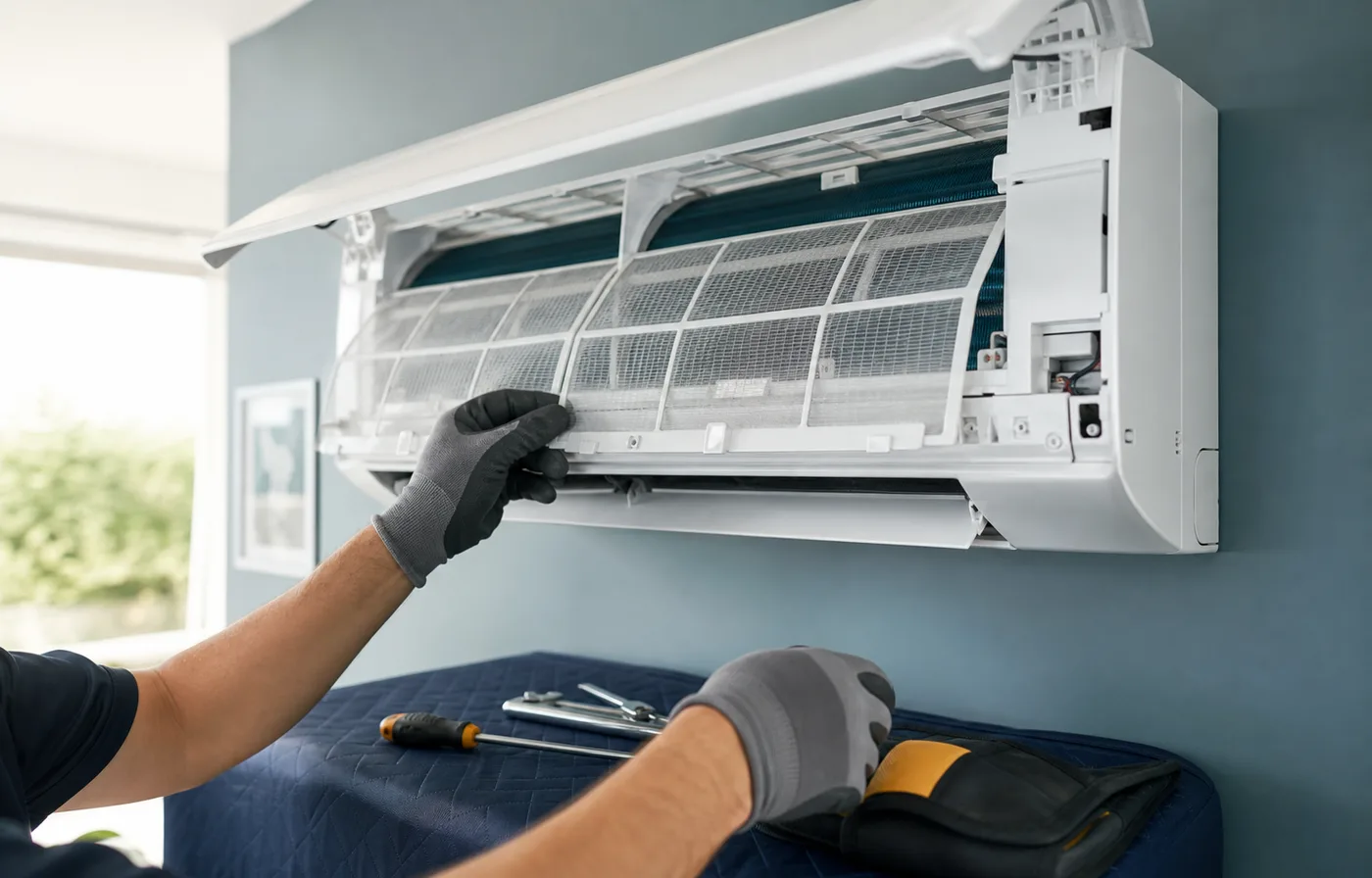
Existing systems
Show the system before booking a visit.
Service and fault enquiries are clearer when the first request includes model labels, controller errors, access photos, and a short symptom history.
- Best for
- Service and diagnosis
- Useful proof
- Labels and error photos
- Parts
- Confirmed separately
- Indoor and outdoor unit labels
- Controller display, error code, or fault symptom
- Access route and last known service date if available
Service or fault route
The next step depends on whether this is planned care or a live fault.
Existing systems are easier to review when the first message separates routine servicing from symptoms, errors, access, and parts risk.
Describe what changed, when it started, error codes, water leaks, noise, heating/cooling loss, or power issues.
If the system is old or unreliable, include labels and photos so Trust AC can compare service versus replacement.
How the review works
From first photos to a quote a customer can actually use.
Each service page now explains the same review path: collect useful evidence, compare the practical options, then confirm the written scope before anyone commits.

01Show the real space
Wide room photos, the intended indoor wall, the outside route, drainage, fuse board, and existing unit labels reduce guesswork.
- Room photos
- Outdoor route
- Fuse board

02Compare realistic options
Trust AC checks unit count, equipment tier, route length, access, parking, and commercial restrictions before confirming the sensible route.
- Unit count
- Access limits
- Tier choice
03Confirm the written scope
The final step should separate equipment, installation work, assumptions, exclusions, warranty, servicing, dates, and payment terms.
- Inclusions
- Warranty
- Payment terms
Review pack
Turn the service page into a useful quote brief.
A professional enquiry should leave the reviewer with enough context to separate what is known, what still needs checking, and what changes the final scope.
Build this review packThe first pass is strongest when the form shows the space, access, route, existing equipment, and constraints together.
- Room and wall photos
- Outdoor route and access
- Fuse board or existing unit labels
The estimate range changes when labour, equipment, travel, drainage, electrics, or restricted working conditions change.
- Unit count and tier
- Pipe route and drainage
- Parking, height, or business-hour limits
Before anyone commits, the customer should know what is included, excluded, optional, and still subject to review.
- Final equipment and scope
- Warranty and servicing position
- Payment timing and appointment details
Who this is for
Customers with existing indoor and outdoor units needing routine maintenance or fault diagnosis.
What affects price
Number of units, access, service history, fault symptoms, and whether parts or a visit are needed.
Photos that help
Indoor unit labels, outdoor unit labels, controller errors, access route, and visible installation condition.
Manual checks
Some faults require an in-person visit and cannot be fully diagnosed online.
Before you send it
Prepare a practical estimate request
A clear first request helps Trust AC review the site faster and keeps the next step practical.
- 01Postcode and property type
- 02Useful photos of the room, wall, outside route, and fuse board
- 03No online payment; final price is manually confirmed