 Trust AC
Cambridge coverage
Trust AC installs and services air conditioning for homes and small businesses around Cambridge, with travel, parking, and access checked before final quote.
Cambridgeshire
Cambridge air conditioning installation, servicing, and air-to-air heat pump estimate guidance for homes, flats, offices, shops, clinics, and small commercial rooms.
Get my price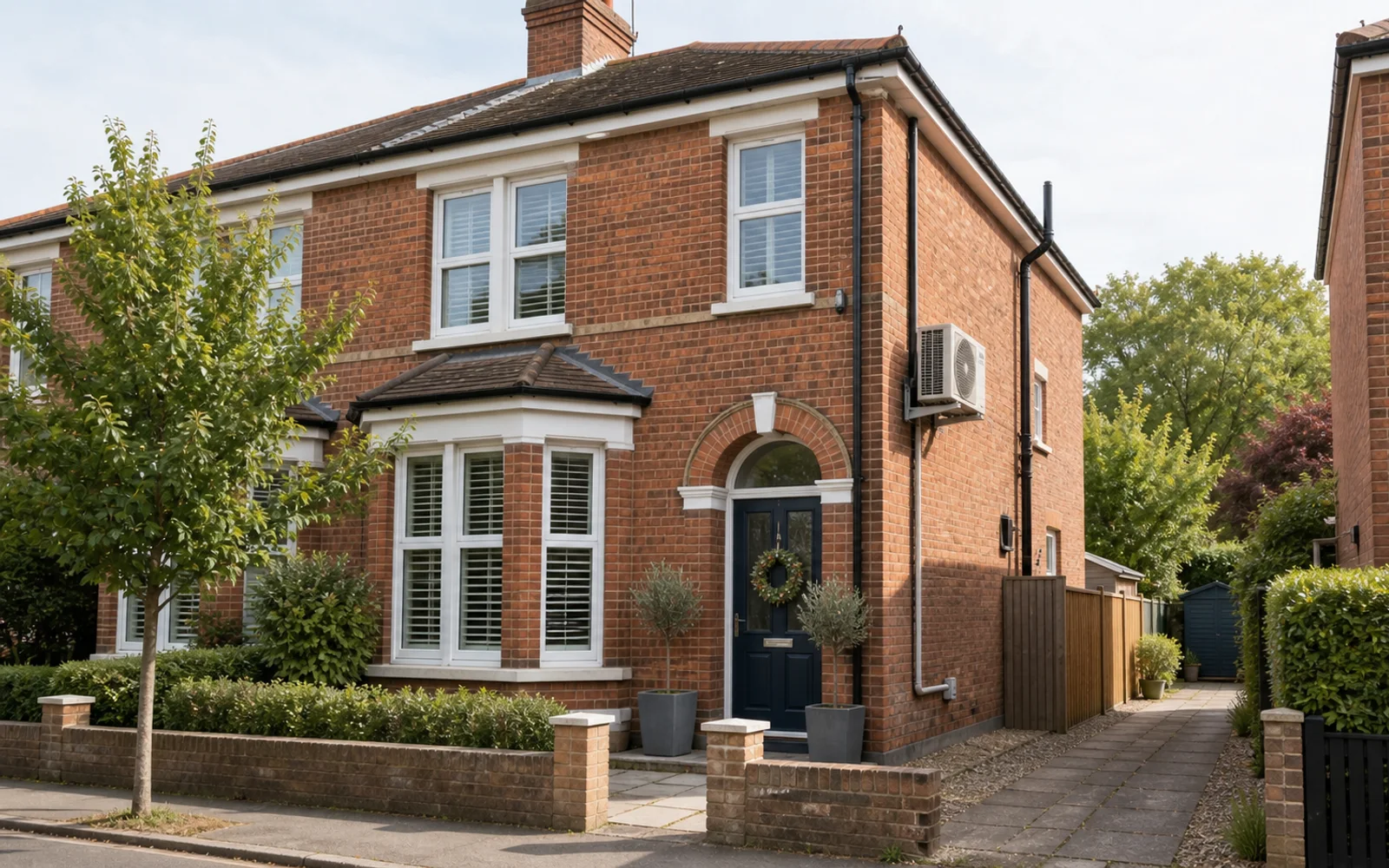
Trust AC installs and services air conditioning for homes and small businesses around Cambridge, with travel, parking, and access checked before final quote.
Useful first details include postcode, room use, indoor and outdoor unit positions, drainage, electrical access, and photos from inside and outside.
Ely, Newmarket, Huntingdon, Royston and nearby towns can be quoted from the same online estimate form.
Online ranges remain indicative. Final equipment, travel, access, dates, and any site visit are confirmed separately in writing before we confirm.
Installing in Cambridge
Cambridge homes range from Victorian terraces near the centre to new estates on the edge of the city, and the right approach differs a lot between them. These are the local points that most often change an installation.
Cambridge City Council and South Cambridgeshire District Council share one planning service, Greater Cambridge Shared Planning, and its map shows whether a property is in a conservation area. The historic centre and many of the older streets around it are. There, a heat pump cannot go on a wall or roof facing the street under permitted development, and a cooling-only unit needs planning permission anywhere.
Cambridge has a large number of listed buildings. Permitted development does not apply to them, and listed building consent is needed for works that affect the building's character, inside or out. Allow time for that application before booking an installation.
Many terraced streets have no side access, so the outdoor unit and tools come through the house, or along a shared rear passage where there is one. A rear wall or the flat roof of a back extension is the usual position. Say in the enquiry how the back of the house is reached; it changes the labour more than the choice of unit does.
Newer developments around Cambridge are often run by a management company, and estate rules or covenants can restrict equipment on outside walls, so check them before choosing a position. New homes in England also have to meet Part O of the Building Regulations on overheating, in force since June 2022, which makes shading and ventilation worth checking before assuming a room needs cooling.
Tenants, including students, need the landlord's written permission before anything is fitted, and in a flat the freeholder's as well. Getting that permission in writing, including who will service the unit, avoids a dispute when the tenancy ends.
Cambridge University Botanic Garden recorded 38.7°C on 25 July 2019, then the highest temperature ever measured in the UK. Loft rooms, top-floor flats and home offices with west-facing glass are the usual problem rooms, and each is worth sizing on its own rather than as part of the whole house.
Nearby coverage
Share your postcode and a couple of photos — we'll come back with your price range.
A single-room installation usually starts around £1,500, with multi-room and commercial work higher. The honest answer for Cambridge depends on the room, the outdoor unit position and the pipe route — so use the free online estimate for an indicative range in minutes, and we confirm the final price in writing.
It depends on the unit. A reversible air-to-air heat pump (heating as well as cooling) on a house is often permitted development if it meets the Class G limits — outdoor unit size, siting away from the road-facing elevation, the number of units, and the MCS noise standard. A cooling-only unit is not covered by those rights and does need planning permission. Listed buildings need listed building consent, conservation areas and other protected areas need permission, and flats have a tighter size limit and usually need freeholder consent as well. Cambridge routes often need early thought around older properties, colleges, terraces, flats, and narrow parking. Send a photo of the outside wall and we will tell you which applies — your local council has the final say.
The online estimate gives you an indicative range in minutes — no account, no obligation. We then check the postcode, access and photos for Cambridgeshire travel before confirming equipment, price and dates in writing.
Yes — Ely, Newmarket, Huntingdon, Royston and other nearby Cambridgeshire towns can be quoted from the same online estimate. Send your full postcode and we will confirm coverage and any travel assumptions before quoting.
Check the Greater Cambridge Shared Planning map, which covers both Cambridge City and South Cambridgeshire. If it is, a heat pump cannot go on a wall or roof facing the street under permitted development, so the outdoor unit usually goes at the back, and a cooling-only unit needs planning permission wherever it goes.
Only with listed building consent. Permitted development does not apply to listed buildings, and consent is needed for works that affect the building's character, inside or out. Unit positions and pipe routes that avoid the historic fabric are more likely to be acceptable; the council decides.