Trust AC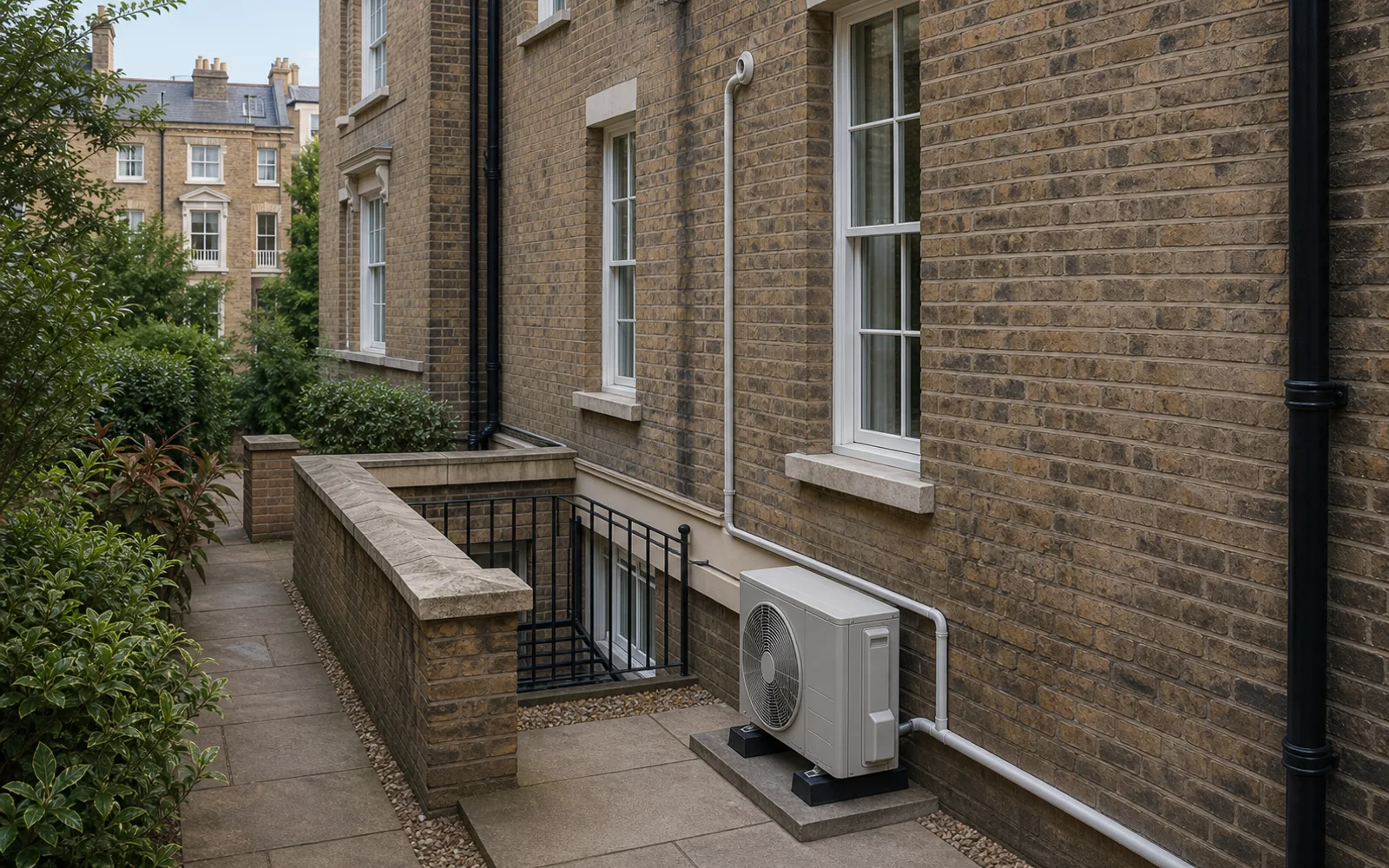
Topic-specific guidance
Outdoor unit placement, noise and planning needs its own estimate logic because outdoor unit placement, airflow, noise, neighbours and planning caveats. The useful first step is to connect the customer's room, evidence, constraints and budget before comparing equipment, dates or written scope. Treat any missing photo, route detail or permission note as an estimate risk rather than a small admin gap. That discipline keeps the article useful for customers and traceable for the team reviewing the enquiry later.
The outdoor unit needs clear airflow. In cooling it rejects heat; in heating it absorbs heat. Tight corners, fences and hot discharge recirculation can hurt performance.
Noise must be judged at real listening positions. Bedroom windows, neighbours, reflective walls and mounting surfaces can matter more than a brochure number.
Planning rules are conditional. In England, permitted development for heat pumps depends on meeting conditions, and listed buildings, conservation areas, roof positions or cooling-only use can change the answer.
A good proposal identifies outdoor location, airflow, neighbour impact and any planning or building-management checks before booking work.
Outdoor placement is a performance, neighbour and permission decision at the same time. The unit needs airflow, service access and a location that makes sense acoustically.
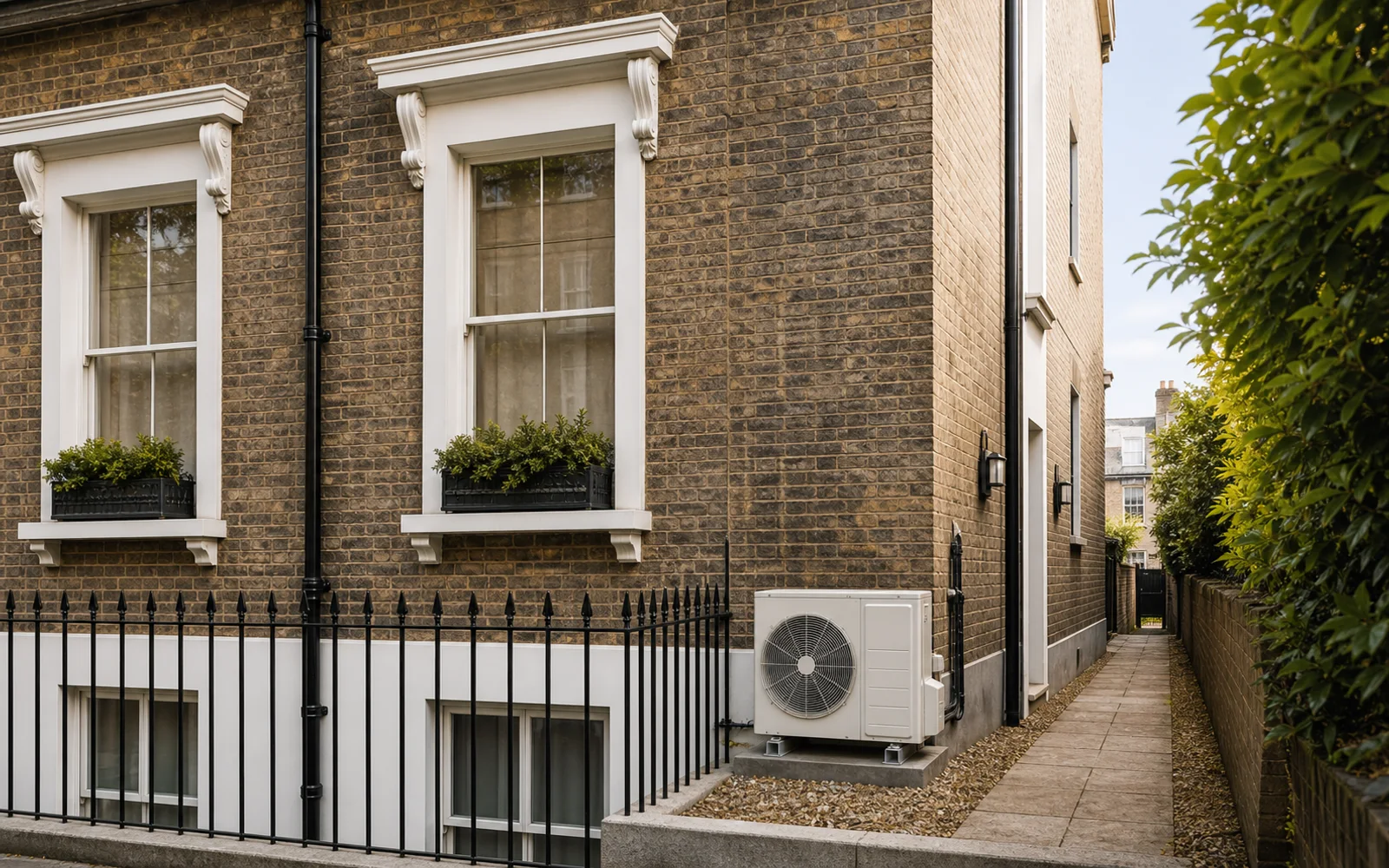
Evidence should show boundaries, windows, neighbour positions, wall material, ground level, roof lines, drains, side passages and whether the unit will be visible from public or shared areas.
The quote should identify the assumed outdoor location and whether planning, landlord or building-management checks are needed. Noise and mounting assumptions should be visible.
The risk is treating the outside unit as an afterthought. A poor external location can reduce performance, annoy neighbours and make a finished job hard to defend.
When Outdoor unit placement, noise and planning is used in the enquiry form, pair the question with the target room, preferred temperature, daily use pattern, budget boundary, outdoor-unit option, access limits, noise sensitivity, drainage route, controller expectation, service access and any permission constraint. That gives the estimator an auditable set of assumptions instead of a single isolated topic.
The position decides more than you expect
The outdoor unit needs to breathe. It rejects heat into the surrounding air, so it wants clear space in front of the coil and above the fan, not a sealed cupboard, a tight side return or a spot boxed in by fencing. Starve it of airflow and it recirculates its own hot air, which shows up as poor cooling and higher bills rather than as an obvious fault.
Distance matters for a second reason: every metre of pipework between indoor and outdoor unit adds cost and, past a point, affects performance. A position that is convenient for the installer and one that is convenient for the building are not always the same, which is why it is worth discussing before the quote is fixed.
Noise, neighbours and where sound actually goes
Sound from an outdoor unit is mostly fan noise and low-frequency hum, and both travel further at night when background noise drops. What matters is not just the unit's rated figure but where it points, what it reflects off, and how far it sits from the nearest window — yours or next door's.
Hard surfaces make this worse. A unit in a narrow passage between two walls, or under a hard soffit, can be noticeably louder at a neighbour's window than the same unit on an open wall. Anti-vibration mounts and a bracket fixed to solid masonry rather than a lightweight or hollow wall are usually what stops a faint hum becoming a complaint.
Access for the engineer, not just for the installer
A position that works on installation day can still be the wrong one, because the unit has to be reached again — for annual servicing, for cleaning the coil, and for a fault that needs diagnosing in the rain. A unit at high level over a conservatory roof, or behind a locked side gate the tenant does not have a key to, turns a routine visit into a scaffolding conversation.
Ask what servicing this position will require before it is fixed to the wall. Somewhere a person can stand safely with the covers off, with room to work at the electrical connection and the service valves, costs nothing extra to choose at the planning stage and quite a lot to change afterwards.
On the wall or on the ground
Wall brackets keep the unit clear of standing water and leaves, out of easy reach, and off a surface that might carry vibration into the ground. What they need in return is a wall that can actually take it: solid masonry is straightforward, while modern cavity blockwork, external insulation and render, timber frame and anything with cladding over it all need the fixing thought about rather than assumed.
Ground mounting on feet or a plinth avoids the wall question entirely and makes servicing easier, which matters more than people expect. The trade is that the unit now sits at ground level, where it can stand in leaf litter, water or snow, where a hosepipe and a lawnmower live, and where it is easier to walk off with.
For most houses either works and the choice follows the property: brackets where the ground is a busy path or a flowerbed, feet where the wall is awkward or the unit is heavy. What decides it in practice is whether rain and meltwater can get away underneath, and whether somebody can still reach it in five years to service it.
The planning question this raises
In England, a reversible unit that also heats can fall under Class G permitted development, but the position is part of what qualifies it: it cannot go on a pitched roof, must sit at least a metre back from a flat roof edge, and cannot go on a wall fronting a highway above ground-floor level. A cooling-only unit needs planning permission regardless of where it goes.
Conservation areas add a second test, and listed buildings are outside permitted development altogether. Sending a photo of the proposed outside wall early is the cheapest way to find out which of these applies to you before anything is ordered.