Trust AC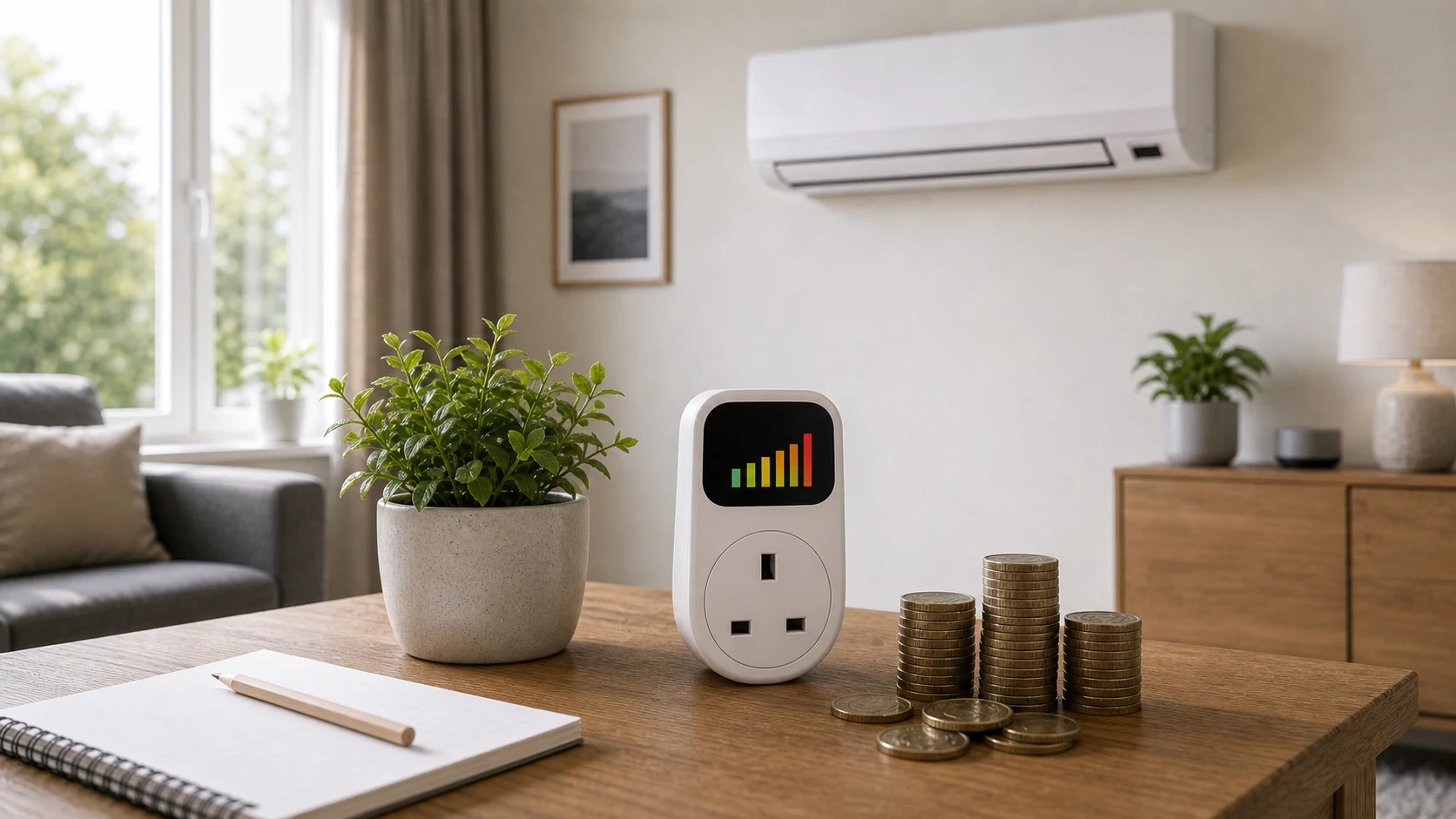
Topic-specific guidance
Running costs and efficiency needs its own estimate logic because running costs, efficiency and why indicative figures need assumptions. The useful first step is to connect the customer's room, evidence, constraints and budget before comparing equipment, dates or written scope. Treat any missing photo, route detail or permission note as an estimate risk rather than a small admin gap. That discipline keeps the article useful for customers and traceable for the team reviewing the enquiry later.
Efficiency figures are measured under conditions; bills happen in real rooms. COP depends on outdoor temperature, indoor load, fan speed, maintenance and set point.
A bedroom used for two hours is not comparable with a shop cooling all afternoon with doors opening. Usage pattern can dominate the bill.
Controls influence cost. Sensible schedules, clean filters, shading and realistic set temperatures reduce demand; extreme settings increase it.
Any running-cost estimate should state tariff, hours, room size, insulation, heat gain and whether heating as well as cooling is being considered.
Cost discussion should be scenario-based. The same unit can produce very different bills in a shaded bedroom, a sunny loft, a server-heavy office or a shop with doors opening all day.
The useful evidence is tariff, expected hours, target temperature, room size, insulation, glazing, shading, people, equipment heat and whether the system is used for heating, cooling or both.
A quote can explain efficiency and controls, but it should not promise a monthly bill without assumptions. Running-cost language should show the scenario behind the number.
The risk is giving customers a precise figure that looks authoritative but ignores behaviour. Controls, filters and set points can move the result materially.
When Running costs and efficiency is used in the enquiry form, pair the question with the target room, preferred temperature, daily use pattern, budget boundary, outdoor-unit option, access limits, noise sensitivity, drainage route, controller expectation, service access and any permission constraint. That gives the estimator an auditable set of assumptions instead of a single isolated topic.
What you are actually paying for
The bill is electricity, and the amount depends on four things: how much heat has to be moved, how many hours the system runs, how efficiently it does the work, and what you pay per unit. Everything else — efficiency classes, marketing figures, rules of thumb — is a way of talking about those four.
Crucially, an air conditioner does not consume power in proportion to its size. A modern inverter varies its output, so a well-matched unit holding a room steady draws far less than its rated maximum for most of the time it is on. The rated figure tells you the ceiling, not the typical.
The variables you actually control
Hours of use is the largest one and the most obvious. Cooling a bedroom for a few hours on warm evenings is a modest addition to a household bill; cooling a large open-plan space all day through a hot spell is a different order of magnitude.
Setpoint matters more than people expect, because the work rises steeply as you push further from the outside temperature. Asking for 19°C rather than 23°C on a hot day costs disproportionately more, and most of that extra is spent making the room colder than you needed.
How well the room holds its temperature is the third, and it is the one worth fixing first. Closing blinds on sunny glazing, or shading a west-facing window, reduces the heat arriving in the first place, and heat that never enters the room costs nothing to remove.
Why the published efficiency figures are optimistic for you
Seasonal efficiency ratings are measured across a defined range of conditions and assume the equipment is matched to the load. They are a fair way to compare two units against each other, and a poor way to predict your bill.
An oversized unit in a draughty room will not reach its rated seasonal efficiency, because it spends its life cycling rather than running steadily at low output. This is the practical reason sizing and efficiency are the same conversation, not two separate ones.
Working out what it costs you, rather than in general
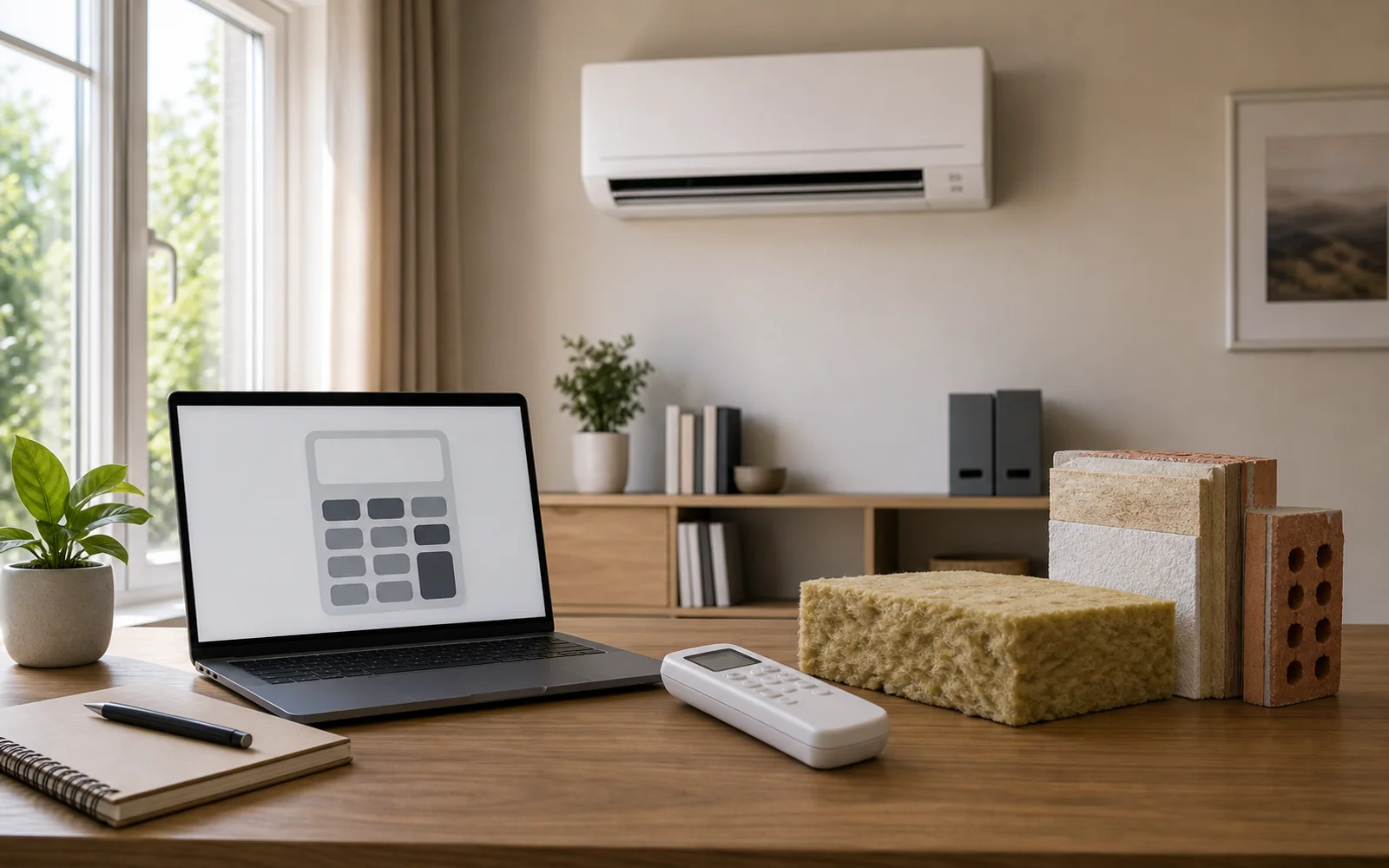
The arithmetic is simpler than it looks. What you pay for is the electricity the unit draws, not the heat it moves, so the number that matters is the input power in kilowatts — a figure on the specification sheet, and usually a fraction of the cooling capacity. Multiply that by the hours you actually run it and by your unit rate, and you have an estimate good enough to decide with.
The part people get wrong is the hours. A unit rarely runs at full input: once the room is at temperature an inverter settles to a much lower output, so an afternoon of running is not an afternoon at the rated figure. Assume full power for every hour and you will produce a number well above anything you will actually see.
If you want to know rather than estimate, a plug-in energy monitor left on the circuit for a fortnight of ordinary use will tell you more than any calculation and more than any efficiency rating. That is also the honest reply to anyone quoting a percentage saving: the property, the tariff and the hours decide it, and only one of those is printed on the box.
Heating changes the arithmetic
Used as a heat pump in winter, the same equipment delivers more heat energy than the electricity it consumes, because it is moving heat rather than generating it. Against direct electric heating — panel heaters, fan heaters, electric radiators — it is substantially cheaper for the same warmth.
Against gas the comparison is much closer, because in the UK electricity costs considerably more per unit than gas — close enough that it depends on your tariff and how you use the rooms. That comparison is set out in full in the piece on air conditioning versus a gas boiler.