Trust AC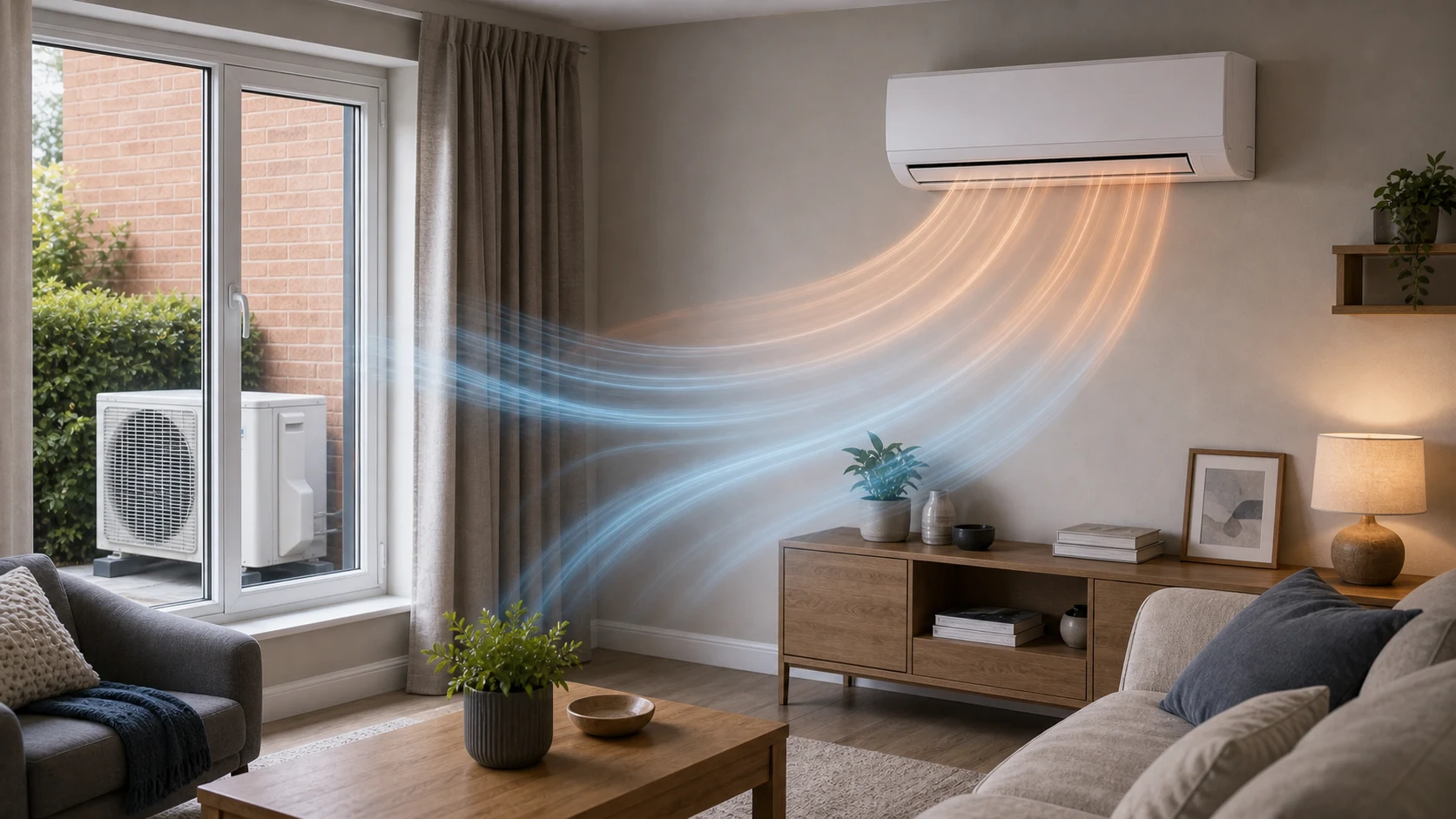
Topic-specific guidance
Air-to-air heat pumps explained needs its own estimate logic because what air-to-air heat pumps do, where they help and where assumptions matter. The useful first step is to connect the customer's room, evidence, constraints and budget before comparing equipment, dates or written scope. Treat any missing photo, route detail or permission note as an estimate risk rather than a small admin gap. That discipline keeps the article useful for customers and traceable for the team reviewing the enquiry later.
An air-to-air heat pump is reversible air conditioning. In cooling mode the indoor coil absorbs heat from the room and the outdoor unit rejects it. In heating mode the cycle reverses, so the indoor unit releases heat into the room.
It is a room-comfort system rather than a hot-water system. That makes it useful for bedrooms, lofts, garden offices, reception areas, treatment rooms and small commercial spaces, but it normally does not provide domestic hot water.
Heating comfort depends on airflow, fan speed, defrost behaviour, set temperature and room layout. A unit that feels excellent in a living room may not suit a bedroom if the air path crosses the bed.
A quote should state whether the proposal is single split, multi split or another layout, whether the system is main heating or support heating, and how outdoor noise and service access have been considered.
The practical question is which rooms need direct comfort and how often they are occupied. Air-to-air heat pumps are strongest when the customer wants controllable room heating and cooling without redesigning the whole wet-heating system.
Reviewers need room photos, external wall options, likely pipe routes, winter-use expectations, summer overheating history and whether doors stay open or closed. Those details change both capacity and perceived comfort.
The quote should state whether the system is being priced as comfort support, primary room heating or cooling-led installation. It should also identify the exact rooms covered, because uncovered rooms will not receive direct heat or cooling.
The common mistake is selling the heat-pump label without explaining the air-to-air boundary. Customers should understand the benefit clearly, but also understand what the system will not do.
When Air-to-air heat pumps explained is used in the enquiry form, pair the question with the target room, preferred temperature, daily use pattern, budget boundary, outdoor-unit option, access limits, noise sensitivity, drainage route, controller expectation, service access and any permission constraint. That gives the estimator an auditable set of assumptions instead of a single isolated topic.
The same box, working in reverse
An air-to-air heat pump is not different hardware from a modern split air conditioner — it is the same equipment described by what it does in winter. Running the refrigeration cycle backwards takes heat out of the outside air, even when that air feels cold, and delivers it indoors through the same wall unit that cools you in August.
The word “heat pump” matters more than it sounds. It is why a system that also heats can qualify as permitted development when a cooling-only unit cannot, and it is why the running-cost arithmetic is different: the machine moves existing heat rather than burning fuel or passing current through an element.
Where it genuinely fits, and where it does not
It suits rooms rather than whole houses. Each indoor unit heats the air in the space it serves, so it is well matched to a home office, a cold extension, a loft room or a house where one or two rooms are the problem. It responds quickly, and it is often far cheaper to run than a plug-in electric heater doing the same job.
What it does not do is produce hot water, and it does not warm rooms it has no unit in. If the goal is to replace a whole-house heating system and a hot-water cylinder, air-to-water is the relevant technology and the comparison is a different one.
What the efficiency numbers are and are not telling you
A heat pump moves heat rather than making it, which is why it can deliver several units of heat for every unit of electricity it draws. That ratio is not fixed, though. It falls as the gap between indoor and outdoor temperature widens, so the figure quoted for a mild day is not the figure you get on the coldest morning of the year.
Seasonal figures average that over a test year, which makes them fair for comparing one machine with another and poor for predicting your bill. What actually decides your running cost is how well the room holds heat, how many hours you run it and what you pay per unit of electricity — none of which appear on the box.
What to establish before pricing it as heating
Say plainly whether heating is a main purpose or a bonus, because it changes the sizing. Heating output falls as the outside temperature drops, so a unit sized only for summer cooling may not carry the room on the coldest January morning.
Also worth settling: which rooms actually need to be warm, how well those rooms hold heat, and what happens on defrost cycles — a normal winter behaviour where the unit briefly pauses heating to clear ice from the outdoor coil. Knowing that in advance stops it being reported later as a fault.
One source of confusion worth naming: an air-to-air heat pump and an air conditioner are the same machine. Which name gets used depends on what is being sold and to whom, so the same equipment appears as cooling in a summer advertisement and as low-carbon heating in a winter one. If you find yourself comparing a heat pump against an air conditioner, check the model numbers before assuming you are looking at two different things.