Trust AC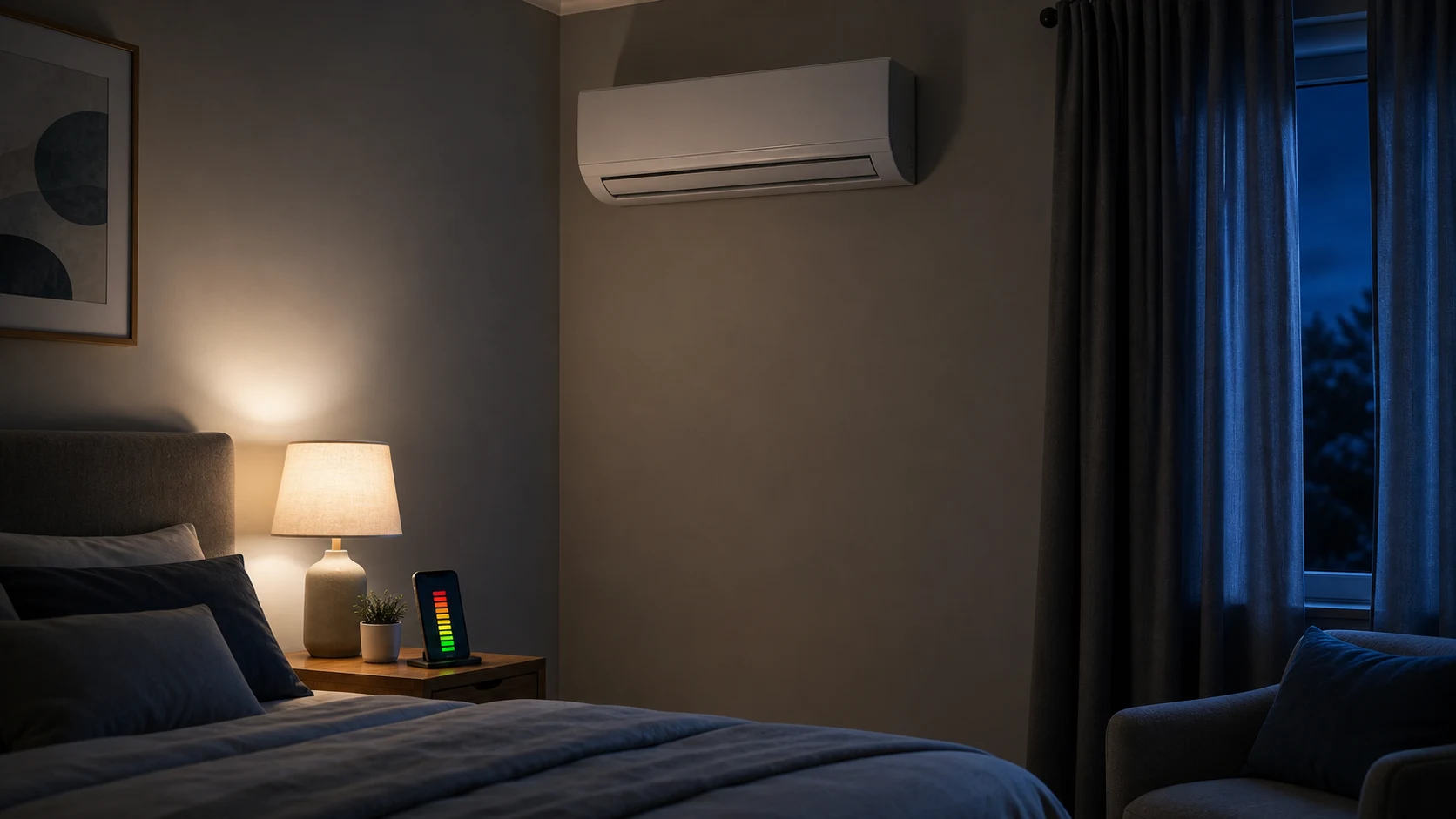
Topic-specific guidance
Bedroom air conditioning and noise needs its own estimate logic because bedroom air conditioning needs careful noise, airflow and night-time comfort choices. The useful first step is to connect the customer's room, evidence, constraints and budget before comparing equipment, dates or written scope. Treat any missing photo, route detail or permission note as an estimate risk rather than a small admin gap. That discipline keeps the article useful for customers and traceable for the team reviewing the enquiry later.
Bedroom air conditioning is judged during sleep, so small sound and airflow details matter. A fan speed that feels fine during the day can feel intrusive at night, especially in compact rooms.
Position should avoid direct airflow across pillows or a sleeping person. The aim is gentle room mixing, not a cold draught. Furniture, wardrobes, beams and curtain positions can all affect the air path.
The outdoor unit can also affect sleep. A unit close to the bedroom window, a neighbour's bedroom or a reflective side passage may feel louder than its brochure rating suggests.
Ask the installer about quiet modes, controller use, pre-cooling, condensate drainage, bed position and outdoor-unit mounting before agreeing the final location.
Bedroom decisions should prioritise sleep comfort over peak cooling speed. The right unit and location should reduce heat before bedtime, keep airflow gentle overnight and avoid a sound character that becomes irritating in a quiet room.
Photos should show bed position, wardrobe depth, curtains, window opening, outside wall options and the nearest neighbour or side passage. A bedroom plan without bed and window context is incomplete.
The quote should identify indoor position, outdoor position, drain route, whether a pump is expected and the noise assumptions used. If a quiet result depends on a particular operating mode, that should be explained.
The highest-risk bedroom jobs are the ones that look simple but put airflow across the pillow or mount the outdoor unit where vibration or reflection is easy to hear at night.
When Bedroom air conditioning and noise is used in the enquiry form, pair the question with the target room, preferred temperature, daily use pattern, budget boundary, outdoor-unit option, access limits, noise sensitivity, drainage route, controller expectation, service access and any permission constraint. That gives the estimator an auditable set of assumptions instead of a single isolated topic.
Why a bedroom is the hardest room to get right
Every other room forgives a bit of noise because there is something else going on. A bedroom at 3am has no background sound at all, so the same unit that is inaudible in a living room becomes the thing you are listening to. Sleep is also unusually sensitive to changes in sound rather than steady sound, which is why a system that cycles on and off is worse than one that runs continuously at low output.
That last point is the strongest argument for correct sizing in a bedroom specifically. An oversized unit cools the room quickly and then keeps starting and stopping, and each restart is a change you notice.
Two different noises, two different fixes
The indoor unit produces air noise — fan and airflow — and that is addressed by running it slower, which a correctly sized inverter can do. Most units have a night or quiet mode that caps fan speed; it slightly reduces capacity and is almost always worth using in a bedroom.
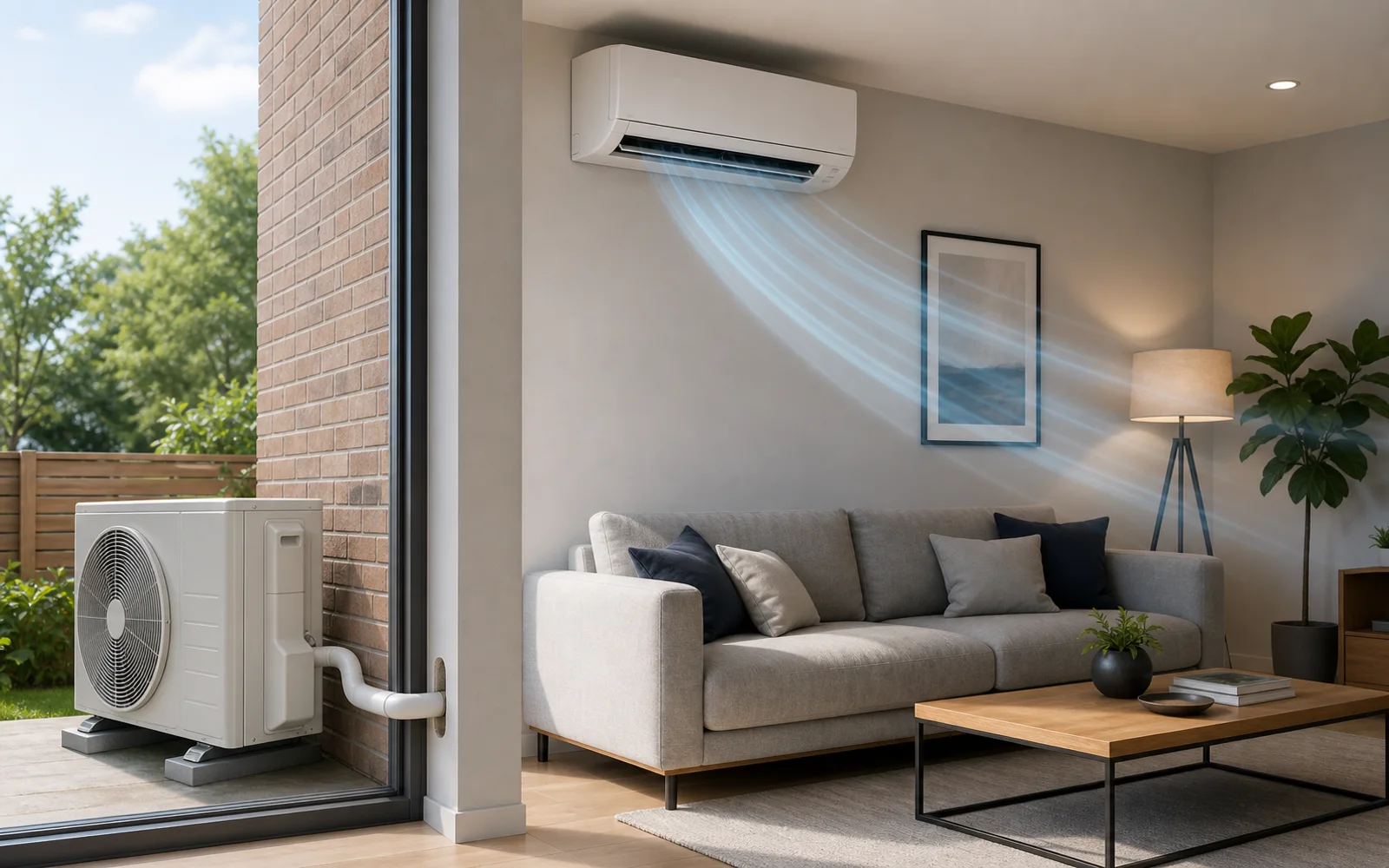
The outdoor unit produces fan noise and low-frequency hum, and the hum travels through structure. If the outdoor unit is mounted on the bedroom wall, or on a lightweight wall, that vibration can arrive inside the room even when the airborne noise is fine. Anti-vibration mounts and fixing to solid masonry — or moving the unit off that wall entirely — are the fixes, and they are far cheaper before installation.
Airflow you can feel is its own problem
Even a silent unit is unpleasant if it blows across the bed. Moving air feels a couple of degrees colder than still air at the same temperature, and people frequently respond by raising the setpoint, which costs more and does not address the draught.
The fix is placement, and it costs nothing at the planning stage. Tell the installer where the bed is and which side you sleep on. Mounting the unit on the wall behind the bed, or angling the throw along the room rather than across it, usually resolves this completely.
What to specify if sleep is the priority
Ask for the indoor unit's sound level at its lowest fan speed, not its maximum, because low speed is where it will spend the night. Ask the same about the outdoor unit, and where it will be mounted relative to the bedroom wall and the nearest window.
Then ask how the schedule will be set. Running gently from before bedtime is quieter and cheaper than starting a hot room from scratch at midnight, and it avoids the aggressive first hour that wakes people up. These are handover details, and they are worth insisting on rather than working out for yourself weeks later.
Decide too whether it will run all night or switch itself off. A timer that stops an hour or two after you fall asleep suits people who are woken by any noise, but the room warms back up and the humidity returns with it, which is what wakes others at four in the morning. Holding a steady temperature all night usually gives the better sleep if the unit is quiet enough to allow it, and that is largely a question of how well it was sized and positioned rather than which model it is.