Trust AC
Topic-specific guidance
How air conditioning works needs its own estimate logic because how split air conditioning moves heat with refrigerant, coils, fans and controls. The useful first step is to connect the customer's room, evidence, constraints and budget before comparing equipment, dates or written scope. Treat any missing photo, route detail or permission note as an estimate risk rather than a small admin gap. That discipline keeps the article useful for customers and traceable for the team reviewing the enquiry later.
Air conditioning works by moving heat. The indoor coil absorbs heat from room air as refrigerant evaporates, and the outdoor coil rejects that heat after the compressor raises the refrigerant pressure and temperature.
The expansion device lowers pressure before the refrigerant returns to the indoor coil. This pressure change and phase change are why the system can keep absorbing heat rather than simply blowing air around.
Fans make the heat-transfer cycle useful to people. Poor indoor or outdoor airflow can reduce comfort, raise noise and make a good model perform badly.
Installation quality affects the cycle: pipe length, insulation, charge, coil cleanliness, outdoor location, room heat gain and controls all change real performance.
This article should help customers understand why installation quality matters. The refrigeration cycle is technical, but the customer-facing point is simple: heat movement depends on airflow, pressure, phase change and clean heat exchangers.
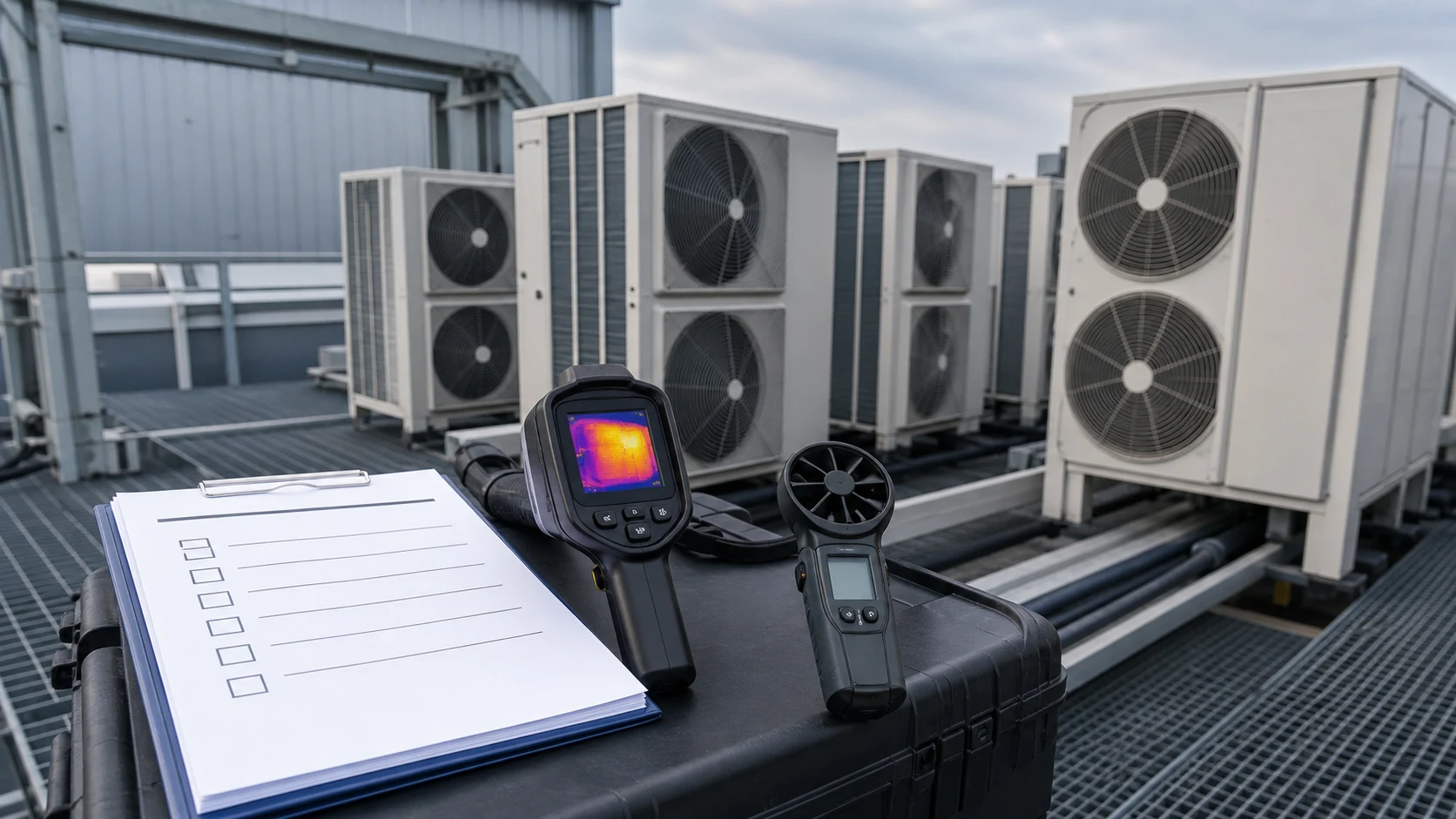
Evidence on site includes airflow space around both coils, sensible pipe route, insulation, condensate route, heat gain, room use and controls. These visible details affect how well the cycle works in practice.
The quote should connect equipment capacity to the room and installation route instead of making the model sound magical. A good model still needs correct pipework, evacuation, commissioning and airflow.
The risk is oversimplifying air conditioning into cold air from a box. Customers who understand heat movement are better prepared to value placement, servicing and professional commissioning.
When How air conditioning works is used in the enquiry form, pair the question with the target room, preferred temperature, daily use pattern, budget boundary, outdoor-unit option, access limits, noise sensitivity, drainage route, controller expectation, service access and any permission constraint. That gives the estimator an auditable set of assumptions instead of a single isolated topic.
Moving heat, not making cold
The single idea worth holding on to is that an air conditioner does not create cold air. It moves heat from one place to another, and everything else follows from that. Refrigerant circulates between an indoor coil and an outdoor coil, changing state as it goes: evaporating indoors where it absorbs heat from the room, condensing outdoors where it releases that heat to the outside air.
The compressor is what makes the cycle run, raising the refrigerant's pressure so it can give up heat outside even on a warm day. The expansion device does the opposite, dropping the pressure so the refrigerant is cold enough to absorb heat indoors. Those four components — evaporator, compressor, condenser, expansion device — are the whole machine, whatever the badge on the front says.
Once you see it as heat transport rather than cold production, several things stop being surprising: why the outdoor unit blows warm air, why the system produces water, and why a unit that is struggling on a very hot day is not necessarily faulty.
Why it removes water, and why that matters
Warm air holds more moisture than cold air. When room air passes over the cold indoor coil, it drops below its dew point and some of that moisture condenses onto the coil — exactly the way a cold glass sweats on a summer day. That water has to go somewhere, which is why every installation needs a drain.
This is not a side effect to tolerate; it is a large part of why air conditioning feels better than a fan. Removing moisture makes a room feel cooler at the same temperature. It is also why the drainage route is one of the things that most often complicates an installation, and why a blocked or badly-fallen drain shows up as water marks on a wall rather than as a cooling problem.
Where the heat actually goes
The heat taken out of the room does not disappear; it is dumped outside by the outdoor unit, which is why the air coming off it is warm and why it needs clear space around it. A unit boxed into a tight alcove or behind a close-fitting screen ends up drawing back in the hot air it has just rejected, and its efficiency falls for reasons that have nothing to do with the equipment.
The same cycle run backwards is what makes the machine a heater in winter: the outdoor coil becomes the cold side and collects heat from outside air, even at low temperatures, because there is still heat in air well below freezing. That reversal is why one of these is not a summer-only purchase, and why the heating figures deserve as much attention as the cooling ones.
What this means when you ask for a price
Because the system is moving heat rather than generating cold, its job is defined by how much heat arrives in the room and how fast. That is why a quote depends on glazing, orientation, insulation, occupancy and the equipment in the room, not simply on floor area. Two rooms of identical size with different windows are genuinely different problems.
It also means the outdoor unit needs somewhere it can actually reject heat: open air around it, not a sealed cupboard or a tight recess. Where that position sits, how far the pipework has to run to reach it and where the condensate can drain are usually what separates a straightforward installation from an expensive one.