Trust AC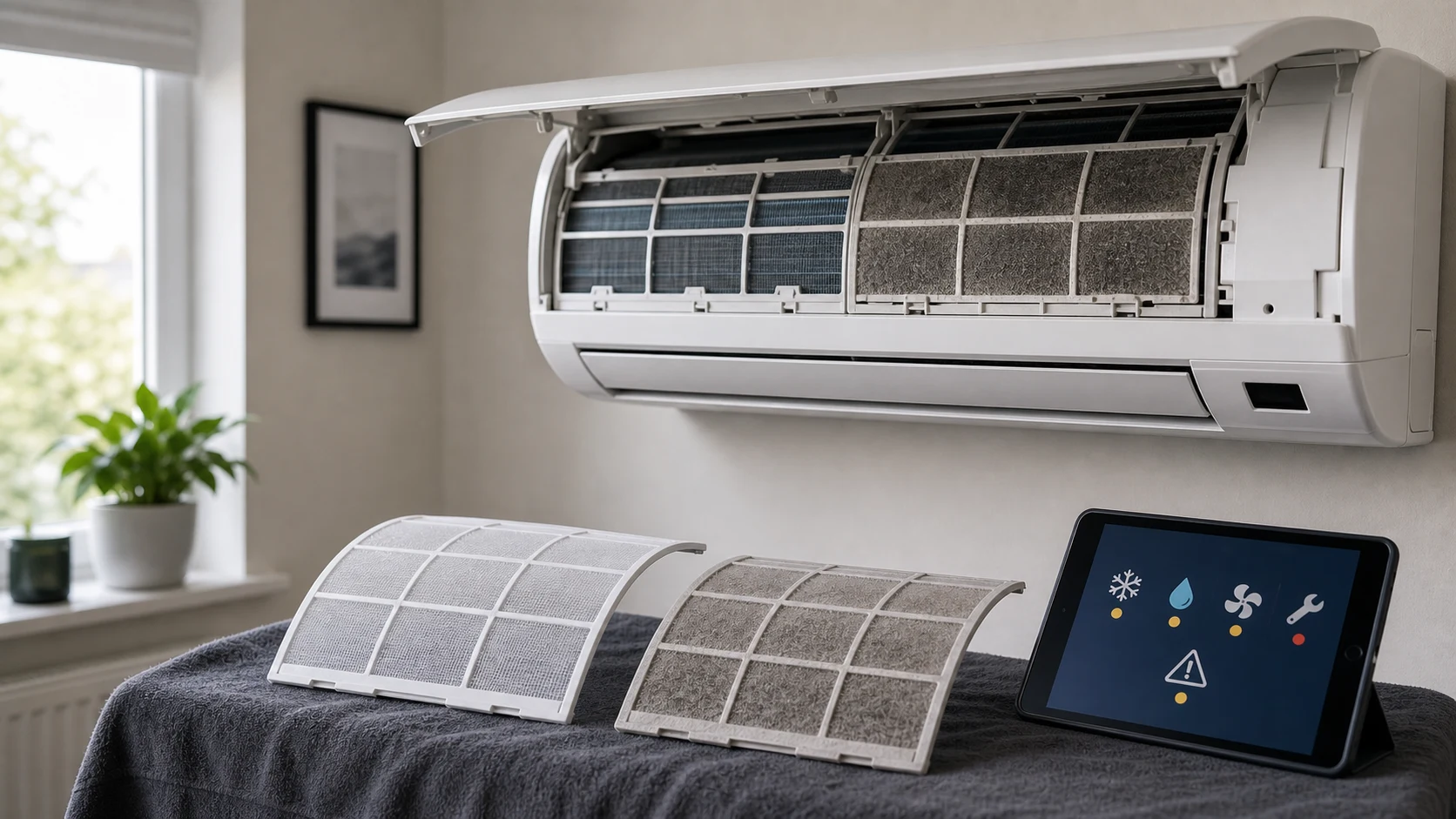
Topic-specific guidance
Common air conditioning fault symptoms needs its own estimate logic because common air conditioning fault symptoms and the evidence that helps a service enquiry. The useful first step is to connect the customer's room, evidence, constraints and budget before comparing equipment, dates or written scope. Treat any missing photo, route detail or permission note as an estimate risk rather than a small admin gap. That discipline keeps the article useful for customers and traceable for the team reviewing the enquiry later.
Fault triage should separate user-setting issues, airflow problems, drainage problems, refrigerant concerns and electrical or control faults. The first step is evidence, not guessing the part.
The strongest enquiry includes photos of labels, controller error codes, mode and set point, filter condition, indoor and outdoor unit photos, recent service history, noises, water leaks and when the symptom appears.
A service response should say whether the first visit is diagnostic, whether parts are included and which findings could change the cost. Fault work should not be sold as a guaranteed repair before inspection.
The risk is promising a fix from a symptom. No cooling, water dripping, ice, smells and error codes can have different causes, so the quote needs diagnostic honesty.
When Common air conditioning fault symptoms is used in the enquiry form, pair the question with the target room, preferred temperature, daily use pattern, budget boundary, outdoor-unit option, access limits, noise sensitivity, drainage route, controller expectation, service access and any permission constraint. That gives the estimator an auditable set of assumptions instead of a single isolated topic.
Blowing, but not cold
If the fan runs and the air is close to room temperature, the usual causes in order of likelihood are a blocked filter, a mode or setpoint that is not what you think it is, an outdoor unit that is not running, and low refrigerant. Check the first two yourself; they cost nothing and account for a surprising share of call-outs.
If the outdoor unit is silent while the indoor unit blows, that points at power, the outdoor fan or the compressor rather than at anything you can fix. If cooling fades gradually over months rather than failing outright, that pattern is characteristic of a slow refrigerant leak — which is a repair, not a top-up, because a sealed system should not lose gas at all.
Water where it should not be
Water dripping from the indoor unit is nearly always drainage rather than a leak of anything harmful. A blocked drain, a pipe that has lost its fall, or a failed condensate pump will all show up this way, and the fix is cleaning or re-routing rather than refrigerant work.
Ice on the pipework or the indoor coil is different and matters more. It usually means airflow is restricted — a filthy filter, a blocked coil, a fan not running — or that refrigerant is low. Switch the unit off and let it defrost rather than running it iced up, because running a compressor with liquid refrigerant returning to it is how compressors die.
Smells and noises
A musty smell on start-up is moisture sitting on the indoor coil and in the drain tray. Running the unit in fan mode for a few minutes at the end of a cooling session dries the coil and prevents it; some units do this automatically if the feature is enabled.
Rattles and buzzing are usually mounting rather than machinery — a loose panel, a bracket, a cover. A grinding or screeching noise from a fan bearing, or a hard clunk from the outdoor unit at start-up, are worth stopping the unit for. Clicking as it changes mode is normal.
What to stop using, and what can wait
Some symptoms mean switch it off now. A burning smell, a breaker that trips repeatedly, visible ice on the pipework, water coming into the room, or a loud grinding or screeching from either unit all justify turning the system off at the isolator and leaving it off until someone has looked at it. Continuing to run through any of those turns a repair into a replacement.
Others can reasonably wait for a booked appointment: reduced cooling that is still working, a musty smell, a rattle you can trace to a loose panel, longer run times than you remember, or a drain that drips outside more than it used to. Note when it started and what makes it worse, and use the system normally in the meantime.
The one in between is a system that has stopped cooling entirely but is otherwise quiet and dry. That is not urgent for the building, but it often is for the equipment, because the most likely causes — low refrigerant, a failing fan — get more expensive the longer they run. Book it rather than living with it for a season.
What to do before you call anyone
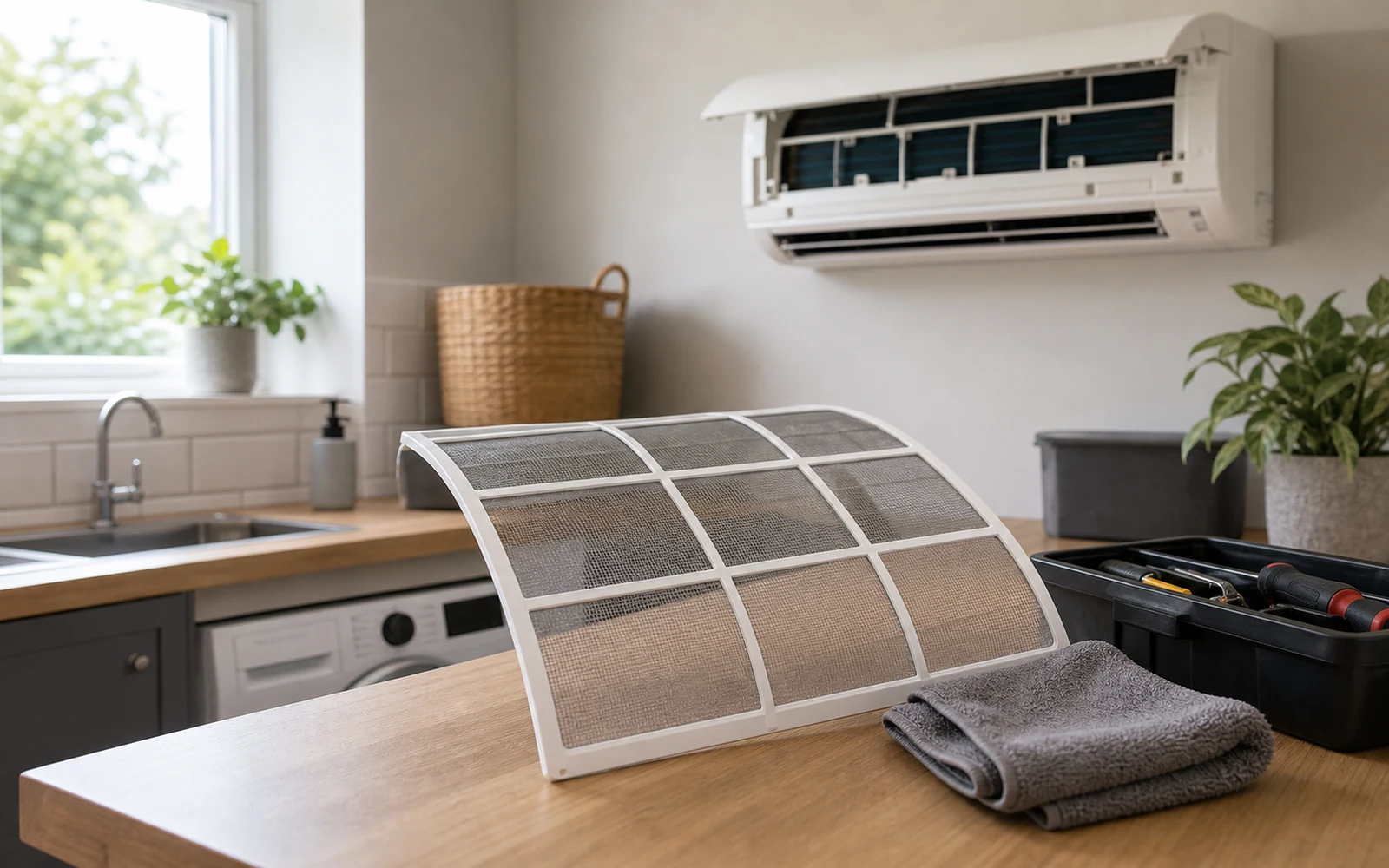
Take the filters out and look at them. Check the outdoor unit is clear of leaves and growth, and that nothing has been stacked against it. Confirm the breaker has not tripped, and note the error code on the display or remote if there is one — it tells the engineer a great deal before they arrive.
Then describe the symptom accurately: when it started, whether it is constant or intermittent, and what changes it. That is worth more than a guess at the cause, and it is what keeps a diagnostic visit short.
A short video helps more than a description. Intermittent noises have a habit of stopping the moment an engineer arrives, and thirty seconds of phone footage of the sound, the error code or the water where it should not be will often get you a diagnosis before anyone is on site.