Trust AC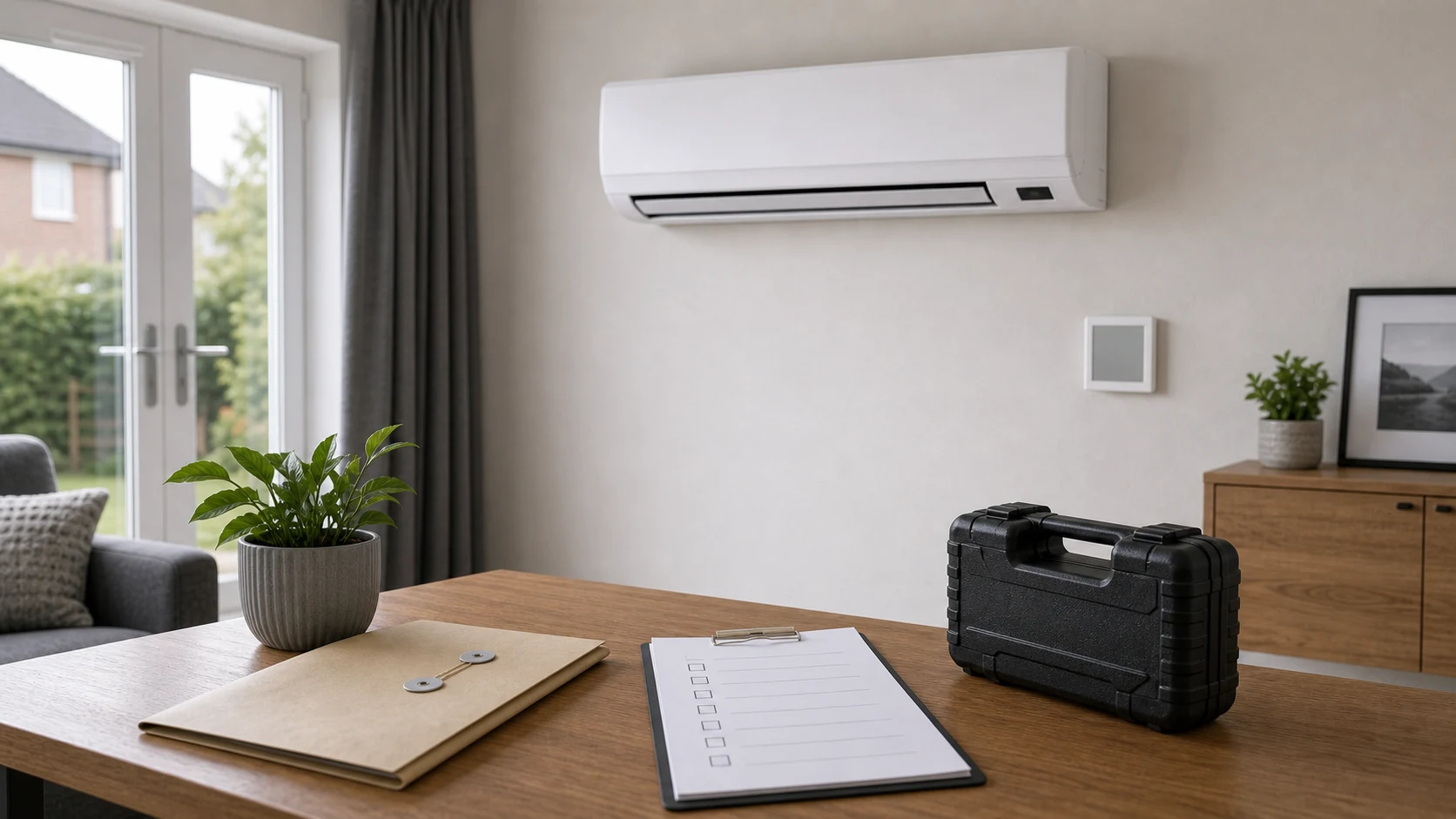
Topic-specific guidance
Warranty, commissioning and handover needs its own estimate logic because warranty, commissioning and handover evidence customers should expect. The useful first step is to connect the customer's room, evidence, constraints and budget before comparing equipment, dates or written scope. Treat any missing photo, route detail or permission note as an estimate risk rather than a small admin gap. That discipline keeps the article useful for customers and traceable for the team reviewing the enquiry later.
Warranty and handover should be treated as part of the installation, not paperwork after the van leaves. Customers need to know what has been commissioned, what is covered and what they must do to keep support valid.
Evidence includes model references, serial numbers, commissioning notes, controller setup, user cleaning instructions, service expectations, warranty registration and photos of completed routes.
The quote should distinguish equipment warranty, workmanship and maintenance responsibilities. If warranty depends on servicing or registration, that should be visible before acceptance.
The risk is a beautiful installation with weak records. Missing handover evidence can make later support, fault diagnosis and warranty conversations harder than they need to be.
When Warranty, commissioning and handover is used in the enquiry form, pair the question with the target room, preferred temperature, daily use pattern, budget boundary, outdoor-unit option, access limits, noise sensitivity, drainage route, controller expectation, service access and any permission constraint. That gives the estimator an auditable set of assumptions instead of a single isolated topic.
Commissioning is a set of measurements, not a switch-on
Turning the unit on and feeling cold air is not commissioning. A system that has been properly commissioned has had the pipework pressure-tested and evacuated to remove air and moisture, the refrigerant charge adjusted for the actual pipe run rather than left at the factory pre-charge, and its operating pressures and temperatures measured and recorded.
The reason to care is that the two commonest causes of a system that underperforms or fails early are moisture left in the circuit and an incorrect charge, and neither is visible from the outside. A unit with either fault will still blow cold air on the day, which is why the day is not when you find out.
What you should be handed
Ask for the commissioning record with the measured figures on it, the manufacturer documentation and remote handsets, the electrical installation certificate and, where a new circuit was added, the building regulations compliance certificate. If the system falls under F-Gas record-keeping, that paperwork too.
Then the warranty itself, in writing, with the start date and what is covered. Manufacturer warranties commonly require the product to be registered within a set period after installation, and often require annual servicing to stay valid. Ask who is registering it and confirm it has been done rather than assuming.
Two warranties, not one
The manufacturer warranty covers the equipment. The installer's workmanship warranty covers the work — the pipework, the brackets, the drain, the electrical connection. They are separate, they usually run for different lengths of time, and the second is the one people forget to ask about.
It matters because most early problems are installation problems rather than equipment problems: a leaking flare, a drain that was never going to fall properly, a bracket on the wrong substrate. A manufacturer will not cover any of those, so a quote that mentions only the manufacturer warranty has left half the question unanswered.
What actually voids a warranty
The common causes are dull rather than dramatic. Missing the registration window after installation, skipping the annual service the terms require, or having work done by someone without the right certification will each put a manufacturer warranty at risk, and none of them feel like a decision at the time.
Running the system during building work is another one worth naming. Plaster dust and brick dust coat the coil in a way ordinary household dust does not, and a unit that has been used to dry out a room mid-renovation can be refused on the grounds that it was not operated in normal conditions. Cover it or leave it off until the dust has stopped.
So keep the paperwork somewhere you will find it, put the service in the calendar rather than trusting memory, and if anyone other than the original installer works on the system, check first what that does to both warranties. The workmanship warranty in particular usually ends the moment somebody else opens the system up.
Use the handover while someone is still there
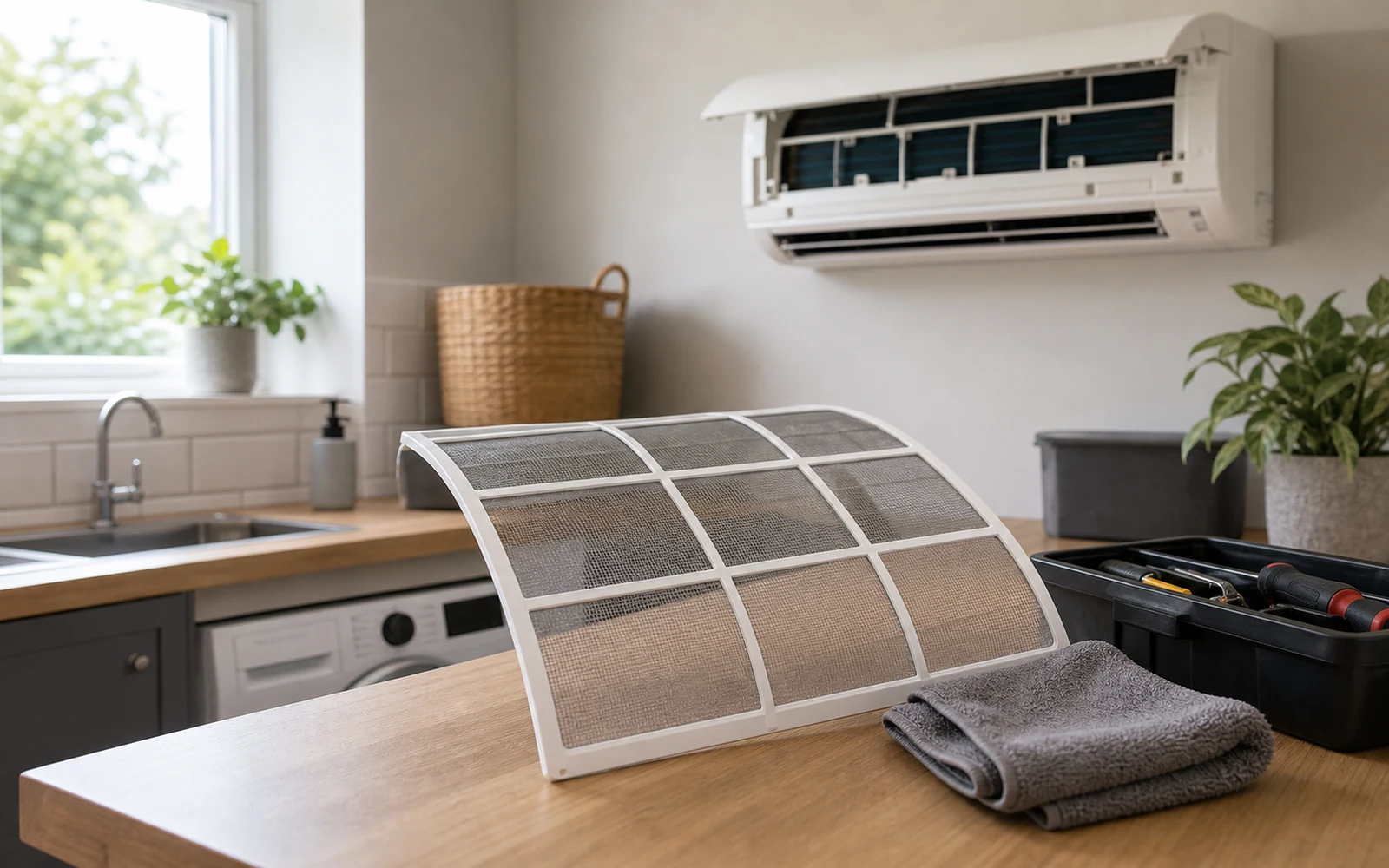
Ask them to show you how to take the filters out and clean them, how to switch between heating and cooling, how to set a schedule, and how to turn on the coil-dry function if the unit has one. Five minutes with the installer present saves an evening with a manual later.
Then run it properly before they leave: in cooling until it holds the setpoint, and in heating for long enough to see the outdoor unit start. And check the drain by running cooling for a while and looking at where the condensate goes, because drainage faults are much easier to fix while the ladder is still up.
One more reason to hold the paperwork yourself: installers do sometimes stop trading. A manufacturer warranty is with the manufacturer and survives that, provided the product was registered and you can show it was installed and serviced properly. The workmanship warranty does not survive it, which is the practical argument for choosing an installer you expect to still be there in five years, and for keeping the commissioning record where you can find it rather than in an email account you no longer use.