Trust AC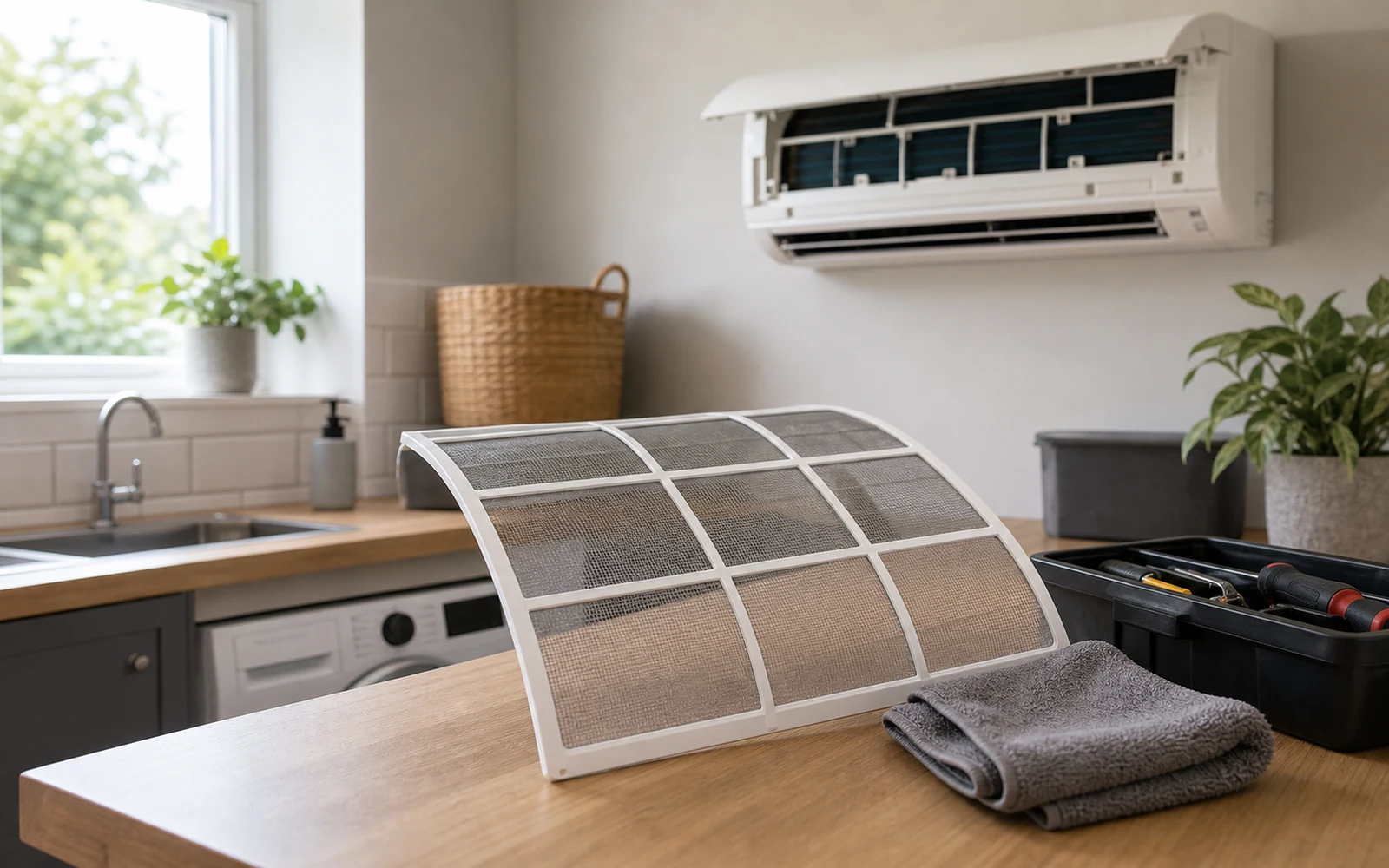
Topic-specific guidance
Maintenance, filters and servicing needs its own estimate logic because maintenance, filter cleaning and servicing expectations for air conditioning systems. The useful first step is to connect the customer's room, evidence, constraints and budget before comparing equipment, dates or written scope. Treat any missing photo, route detail or permission note as an estimate risk rather than a small admin gap. That discipline keeps the article useful for customers and traceable for the team reviewing the enquiry later.
Maintenance begins with airflow. Dirty filters and coils reduce airflow, increase workload and can make the system feel weak even when the equipment is not broken.
Professional servicing may check drains, coils, fans, controls, visible leaks, mounting condition and operating temperatures. The exact checklist depends on use and system type.
Condensate should be treated seriously. Blocked drains or failed pumps can cause water damage, so drain access should be planned during installation.
Commercial users need service records because downtime affects staff and customers, and records help warranty and fault diagnosis.
Maintenance expectations should be set before installation, especially for bedrooms and businesses. A system that cannot be accessed easily is harder to keep clean and reliable.
Evidence includes filter access, outdoor-coil access, drain access, pump location, isolation point and how often the room is used. Commercial dust, cooking or treatment spaces may need closer attention.
The quote or handover should explain user cleaning, professional servicing and what symptoms justify a callout. It should not make maintenance sound optional.
The risk is treating servicing as aftercare marketing. Dirty filters, blocked drains and ignored leaks can change comfort, cost and warranty outcomes.
When Maintenance, filters and servicing is used in the enquiry form, pair the question with the target room, preferred temperature, daily use pattern, budget boundary, outdoor-unit option, access limits, noise sensitivity, drainage route, controller expectation, service access and any permission constraint. That gives the estimator an auditable set of assumptions instead of a single isolated topic.
The part you should do yourself
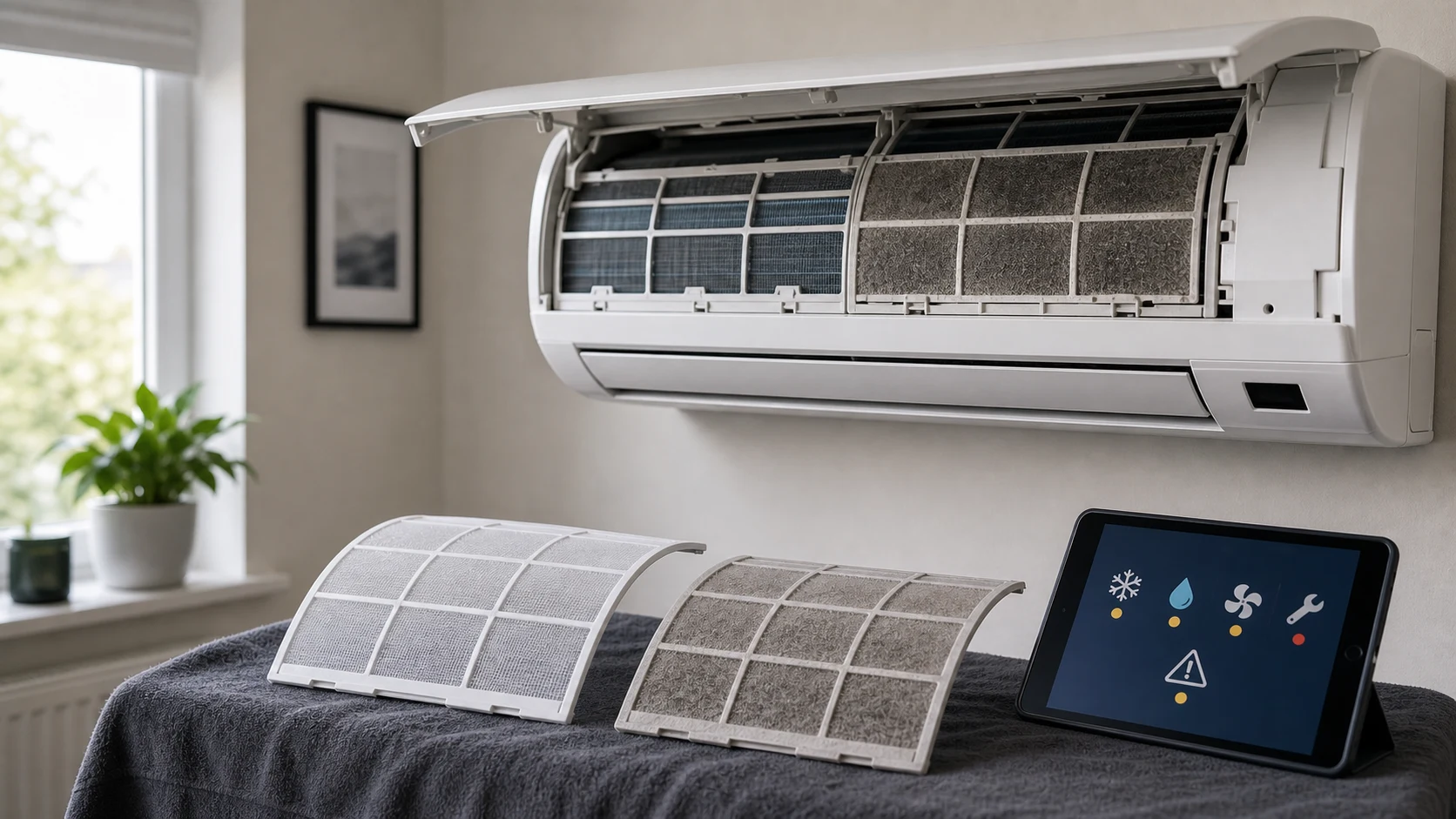
Filters are user-maintainable by design. They clip out of the indoor unit, rinse under a tap, dry, and go back. Doing that every month or two through the season is the single highest-value maintenance action, and it costs nothing.
A clogged filter is also the most common cause of a system that appears to have lost performance. Reduced airflow means less heat moved, longer run times and higher bills, and in bad cases the coil ices up — which looks alarming and is usually just an airflow problem wearing a disguise. If cooling seems weaker than last summer, check the filters before calling anyone.
What a service visit covers that you cannot
A professional service goes past the filter to the parts you should not open: checking refrigerant pressures and looking for signs of leakage, cleaning the indoor and outdoor coils properly, clearing and testing the condensate drain, checking electrical connections and confirming the unit is performing to specification rather than merely running.
The drain in particular is worth someone looking at annually. It sits wet all season, and a slow blockage gives no warning until water appears somewhere it should not.
How often, and why the warranty cares
Annual servicing suits most homes and light commercial use. Somewhere dusty, somewhere running all year, or a system a business depends on will justify more frequent attention; a bedroom unit used for a few weeks each summer will not need as much.
The reason to be organised about it is that manufacturer warranties frequently require documented servicing to remain valid. That condition is easy to overlook at purchase and expensive to discover when you have a fault three years in. Ask what the warranty requires before you buy, keep the records, and treat the service interval as part of the cost of ownership rather than an optional extra.
The outdoor unit needs attention too
Almost all the maintenance advice people are given concerns the indoor unit, and the outdoor one quietly accumulates the things that actually restrict it. Leaves and seed drift pack into the base, the coil fins on the back and sides clog with dust and pollen, and shrubs grow in against a unit that was clear when it was installed.
The effect is the same as a blocked filter but on the side that rejects heat: the unit cannot get rid of what it has collected, so it works harder, runs longer and costs more. Twice a year, clear whatever has gathered around and under it, cut back growth to leave clear space on the intake and discharge sides, and check nothing has been leant against it or stored on top.
Straightening bent fins and washing the coil are jobs for the service visit rather than for you — the fins are sharp and easily damaged, and the electrical side should not be opened. What you can do is keep the space around it clear, which is most of the benefit and costs nothing.
Refrigerant is not a consumable
A sealed system should not lose refrigerant. If a unit needs topping up it has a leak, and a company that tops it up every year without finding the leak is not fixing anything — the piece on refrigerants and F-Gas explains why that matters legally as well as financially.
Anyone handling refrigerant needs F-Gas certification. It is entirely reasonable to ask an engineer to confirm that before they work on your system, and any legitimate company will answer without hesitating.
Keep the service records. They are what a manufacturer asks for if a warranty claim is ever made, and they are worth having when you sell the property or hand a rental over, because a system with a documented history is treated very differently from one with none.