Trust AC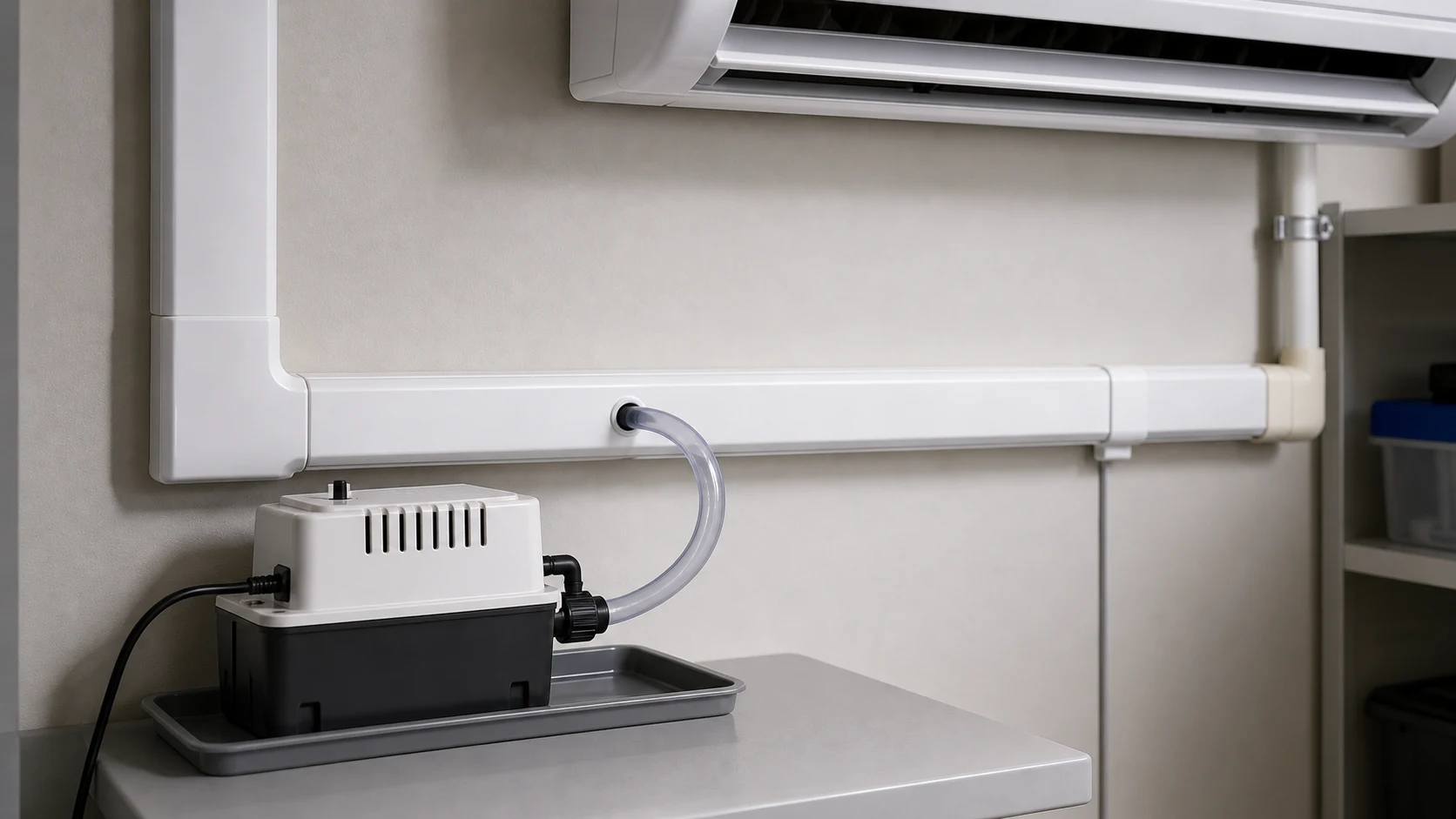
Topic-specific guidance
Condensate pumps explained needs its own estimate logic because when condensate pumps help, what they add and what customers should maintain. The useful first step is to connect the customer's room, evidence, constraints and budget before comparing equipment, dates or written scope. Treat any missing photo, route detail or permission note as an estimate risk rather than a small admin gap. That discipline keeps the article useful for customers and traceable for the team reviewing the enquiry later.
A condensate pump is a practical answer when gravity drainage cannot be achieved, but it is not a free detail. It adds noise potential, service needs and a failure point that should be justified.
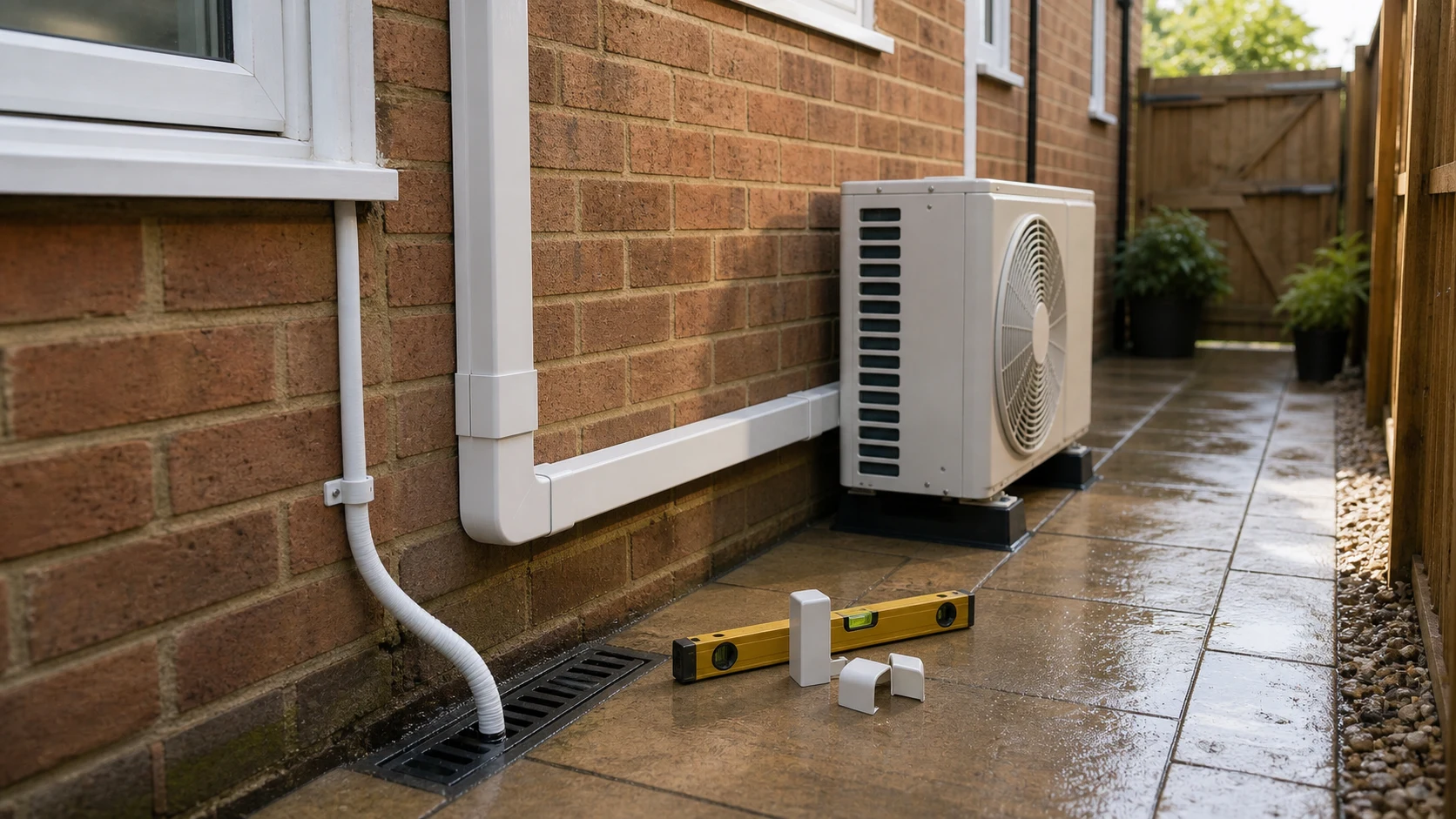
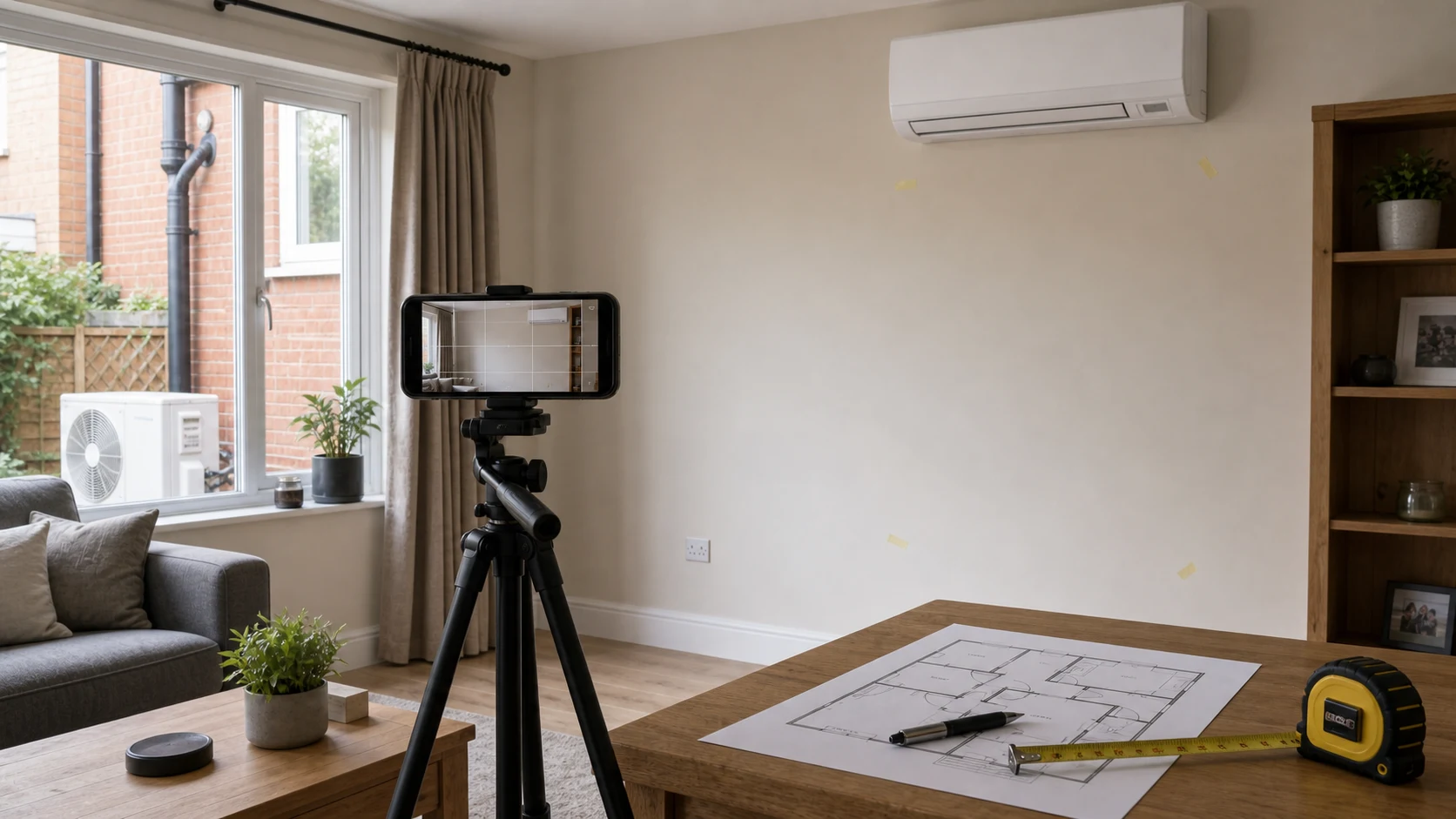
The reviewer needs to see drain positions, ceiling voids, external routes, unit height, pump location and where water can safely discharge. A photo of the proposed indoor wall alone is not enough.
The quote should state whether a pump is included, where it will be fitted and what maintenance or callout risks the customer should understand. Gravity drainage should be preferred where the route allows it.
The risk is hiding a pump inside the job until installation day. Customers may object to pump sound, access panels or future maintenance if those were not explained in advance.
When Condensate pumps explained is used in the enquiry form, pair the question with the target room, preferred temperature, daily use pattern, budget boundary, outdoor-unit option, access limits, noise sensitivity, drainage route, controller expectation, service access and any permission constraint. That gives the estimator an auditable set of assumptions instead of a single isolated topic.
When gravity cannot do the job
An indoor unit produces water continuously while cooling, and the normal way to remove it is a drain pipe that falls all the way to somewhere it can discharge. A condensate pump exists for the cases where that fall is not available: the unit sits low, the only route out runs uphill, or the discharge point is above the unit.
It is a small pump with a reservoir and a float switch. Water collects, the float rises, the pump runs briefly and pushes the water up and out. That is the whole device, and it is a well-proven solution — it is simply one more component in a system that would otherwise have none.
What it adds, honestly
It adds cost, both for the pump and for the additional installation work. It adds a small intermittent noise — a brief buzz every few minutes while the system is running hard — which is usually unremarkable in a living room and worth thinking about in a bedroom.
It also adds a failure mode. A gravity drain has nothing to break; a pump can jam, block or fail, and when it does the water has nowhere to go. Most pumps have a safety switch that stops the air conditioning rather than letting it overflow, which is the behaviour you want, and a reason to ask whether one is fitted.
Avoiding one is often possible
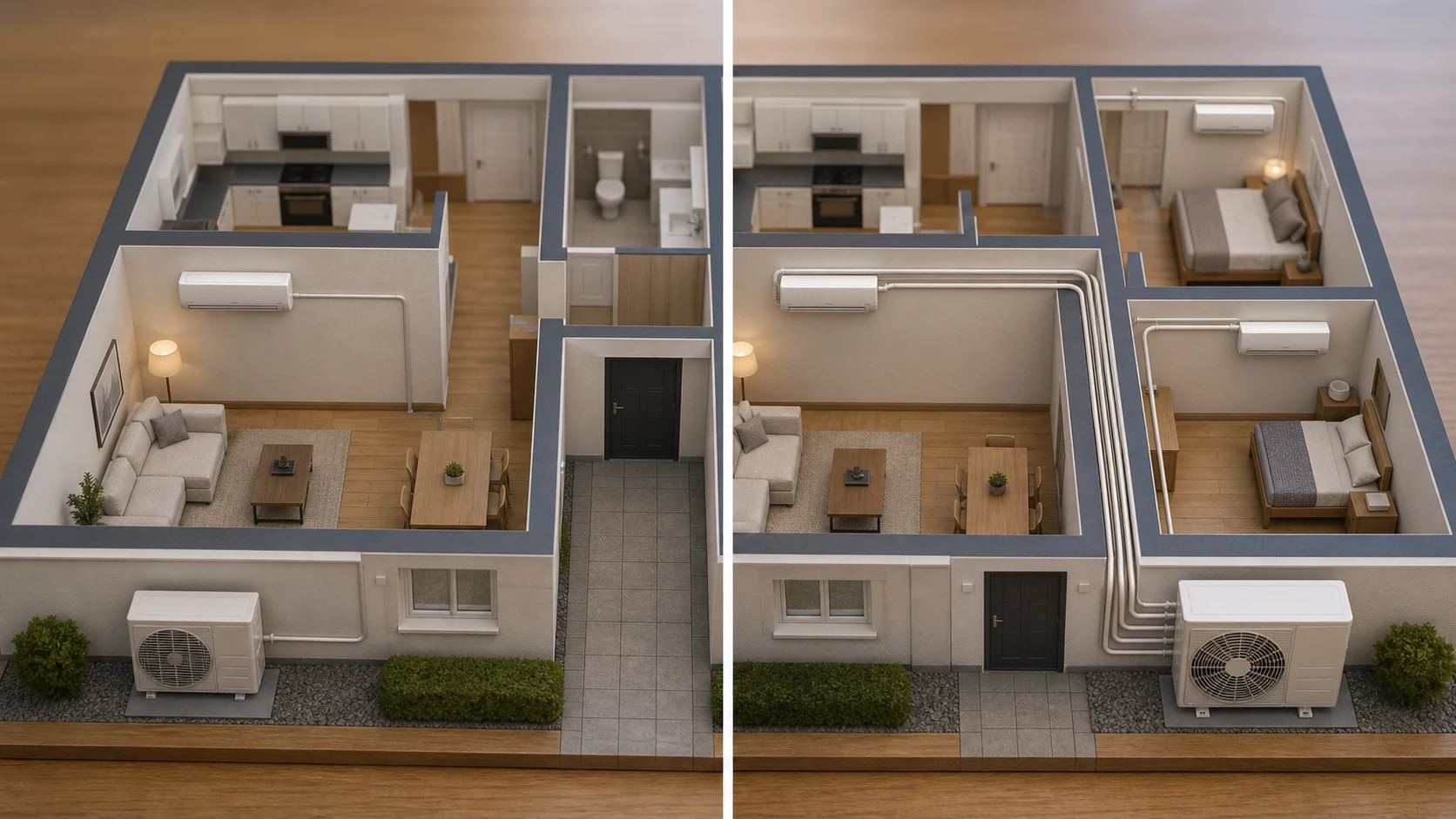
Because the need for a pump is created by the indoor unit position, discussing drainage while choosing that position frequently removes the requirement altogether. A unit a little higher on the wall, or on a different wall closer to an external one, can turn a pumped installation into a gravity one.
That is a conversation worth having before the quote is fixed rather than after. It is also worth asking directly whether a pump is included in a quote, because a cheaper quote that assumes gravity drainage on a position that cannot achieve it is not actually cheaper.
How it is wired, and what happens when it fails
A properly installed pump is not simply plugged in alongside the unit. It carries a float switch wired back to the indoor unit so that if the water rises past a set level — because the pump has failed, or the discharge pipe is blocked — the air conditioning shuts down rather than continuing to produce condensate the pump cannot move.
That interlock is the difference between a pump failure being an inconvenience and being a ceiling repair. It is worth asking for explicitly, because a pump wired only to a power supply will keep the unit running while the tray overflows, and the first you know about it is a stain spreading on the plasterboard below.
The failure itself is usually undramatic: the unit stops cooling and shows a fault, or you hear the pump running continuously without clearing. Neither is an emergency, but neither should be reset and ignored either — a pump that has started cycling like that is telling you the discharge route needs looking at.
Living with one
Pumps need occasional cleaning, because what they move is not pure water — it carries dust from the coil, and over time that becomes sludge in the reservoir. A pump that has never been cleaned is the usual cause of a pump that has stopped working.
So its position matters: it needs to be reachable without dismantling the installation. Ask where it will sit and how it is accessed, and add it to whatever gets checked at the annual service. A pump nobody can reach is a leak waiting for a hot week.
Make a note of the pump model and where it is, and keep it with the system paperwork. Pumps are a wear item with a shorter life than the air conditioning itself, so at some point one will need replacing, and knowing what is already there — and how to reach it — turns that into a short visit rather than an investigation. If it was concealed above a ceiling or inside a boxing, photograph the position before it is closed up.