Trust AC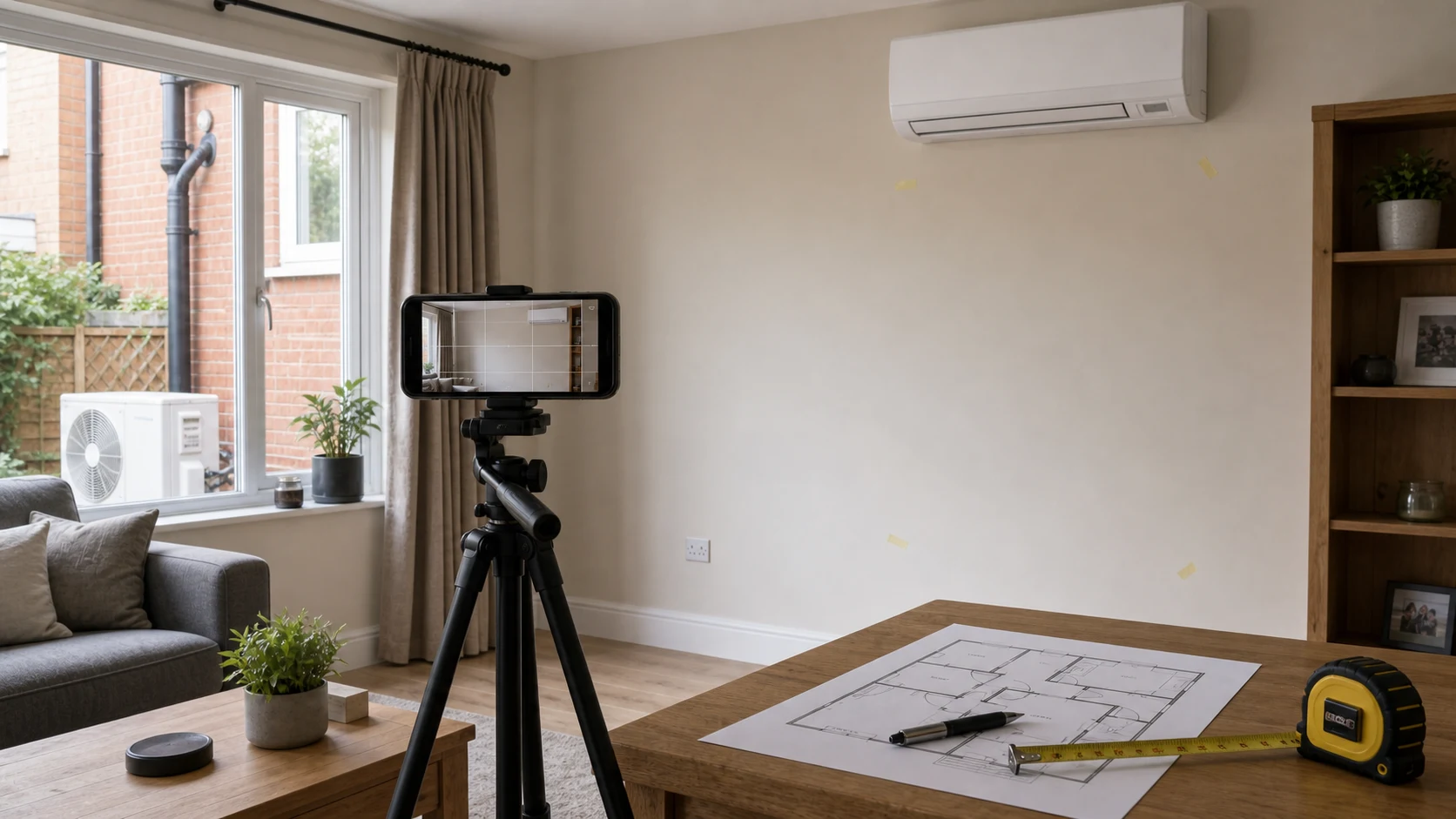
Topic-specific guidance
Installation survey and photos needs its own estimate logic because what photos and site details make a remote estimate more useful. The useful first step is to connect the customer's room, evidence, constraints and budget before comparing equipment, dates or written scope. Treat any missing photo, route detail or permission note as an estimate risk rather than a small admin gap. That discipline keeps the article useful for customers and traceable for the team reviewing the enquiry later.
A strong photo pack shows context. Wide room views, proposed indoor wall, outside wall, route, drain points, fuse board and existing labels help an installer challenge assumptions.
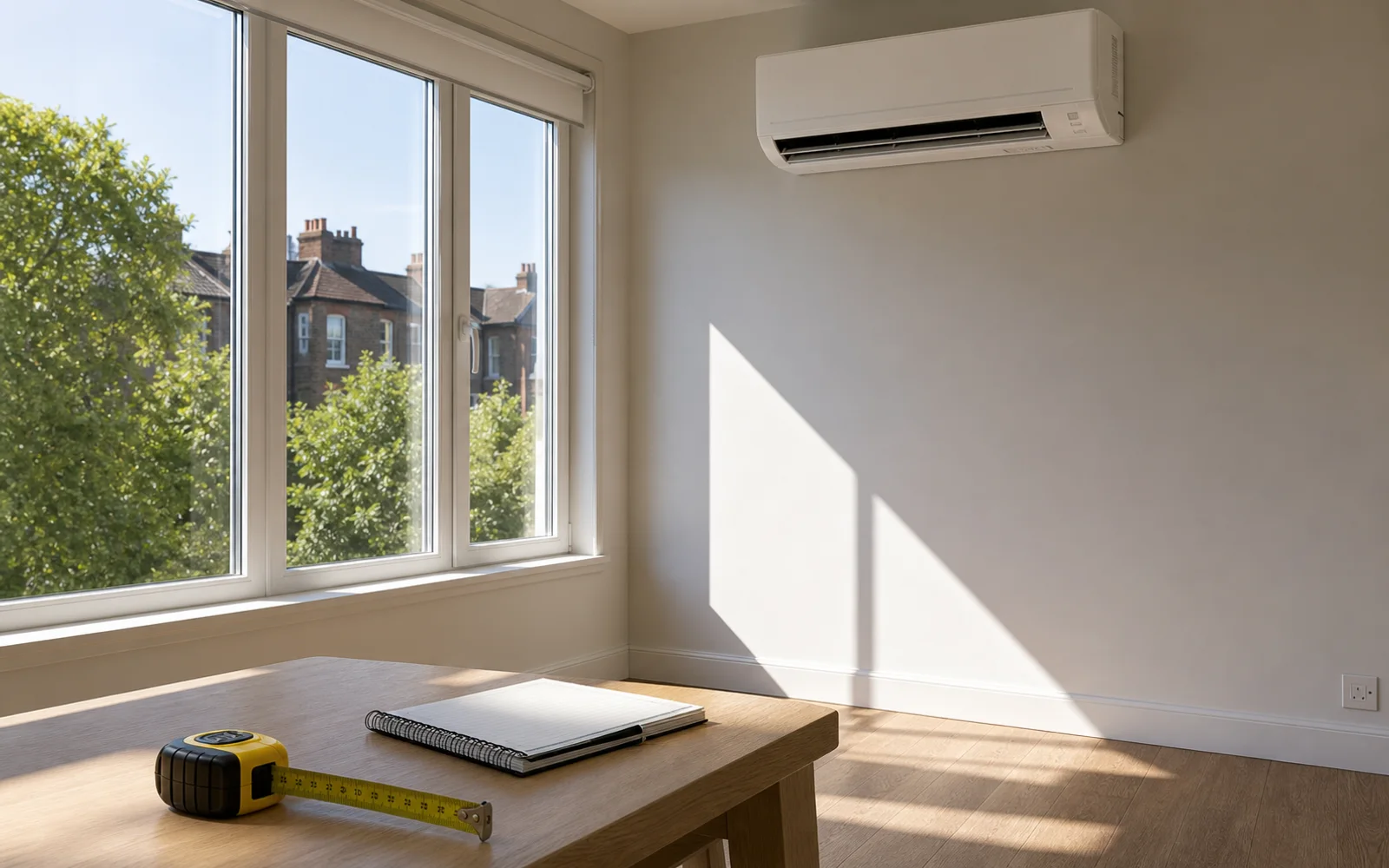
Room photos should show windows, doors, ceiling height, furniture and where people sit or sleep. This supports airflow and noise decisions, not just capacity.
External photos should show boundaries, neighbours, ground level, roof lines, drains and access. A route that looks simple indoors may be difficult outside.
For commercial sites, include customer areas, staff routes, parking and opening constraints because those affect labour and timing.
Photo-led survey is about reducing assumptions before a visit or written quote. It is not a replacement for professional judgement, but it can prevent obvious surprises.
The strongest evidence set includes wide room photos, close wall photos, outside elevation, proposed drain route, fuse board, access route, parking and any existing equipment labels.
The quote should reflect what the photos proved and what they did not prove. Hidden structure, electrical findings, permission and access equipment may still need confirmation.
The risk is sending attractive but narrow photos. Cropped images hide drains, neighbours, access and route problems, which are often the details that change labour.
When Installation survey and photos is used in the enquiry form, pair the question with the target room, preferred temperature, daily use pattern, budget boundary, outdoor-unit option, access limits, noise sensitivity, drainage route, controller expectation, service access and any permission constraint. That gives the estimator an auditable set of assumptions instead of a single isolated topic.
What a remote estimate is actually trying to establish
An online estimate is not a guess dressed up as a number. It is an attempt to answer three questions from a distance: how much heat has to be moved, where the equipment can physically go, and what work is needed to connect the two. Photos matter because they answer the second and third far better than any description does.
That also explains why some enquiries come back with a range and others come back with questions. If the pictures show the room, the intended wall and a clear outdoor position, most of the uncertainty is gone. If they show only the room, the estimator has to price around possibilities.
The shots that change the answer
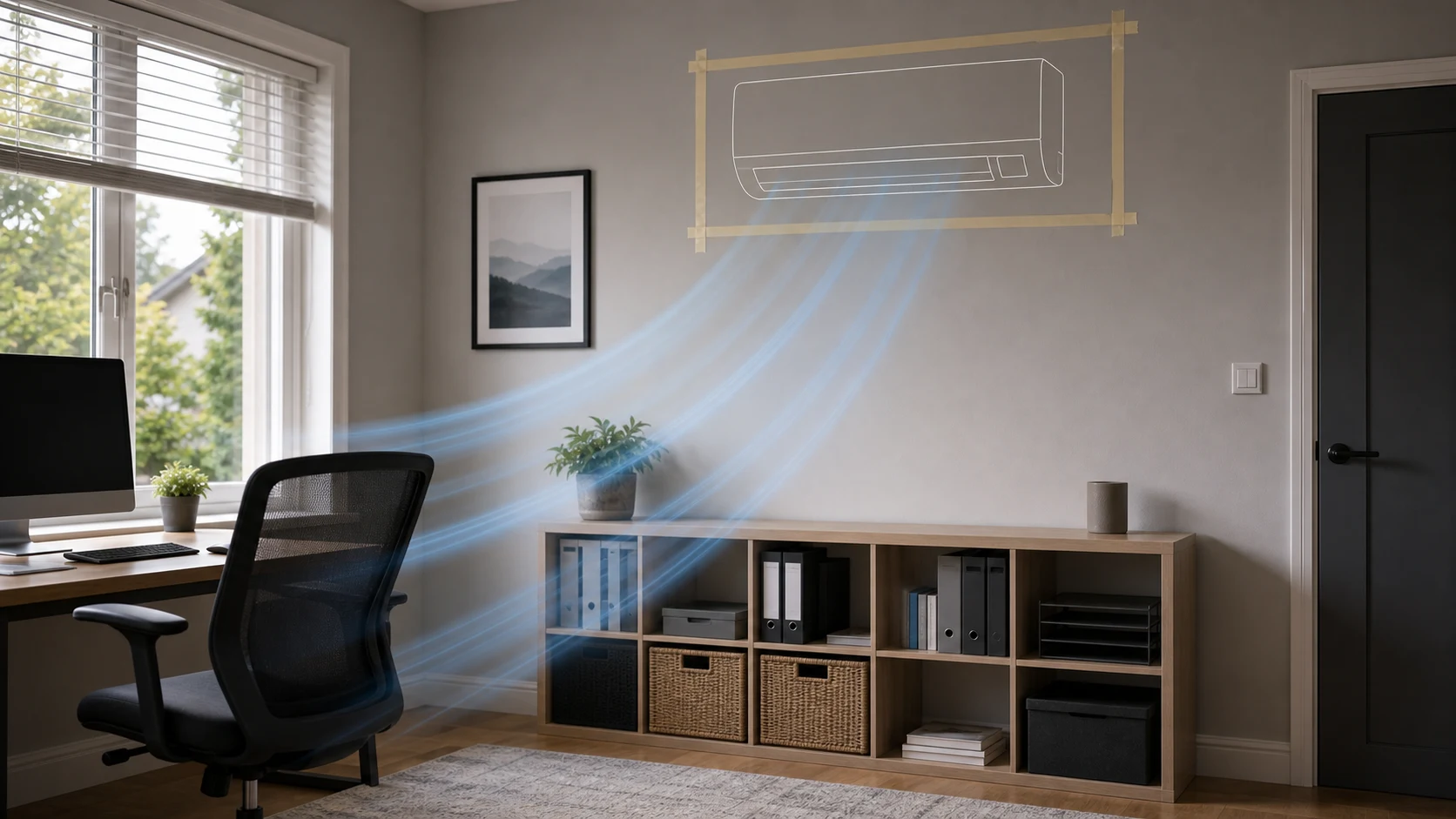
Start wide. A photo from the doorway showing the whole room, including windows and where the sun falls, tells more about heat gain than a close-up of a wall. Then the wall you would like the indoor unit on, taken far enough back to show the ceiling line and anything in the way.
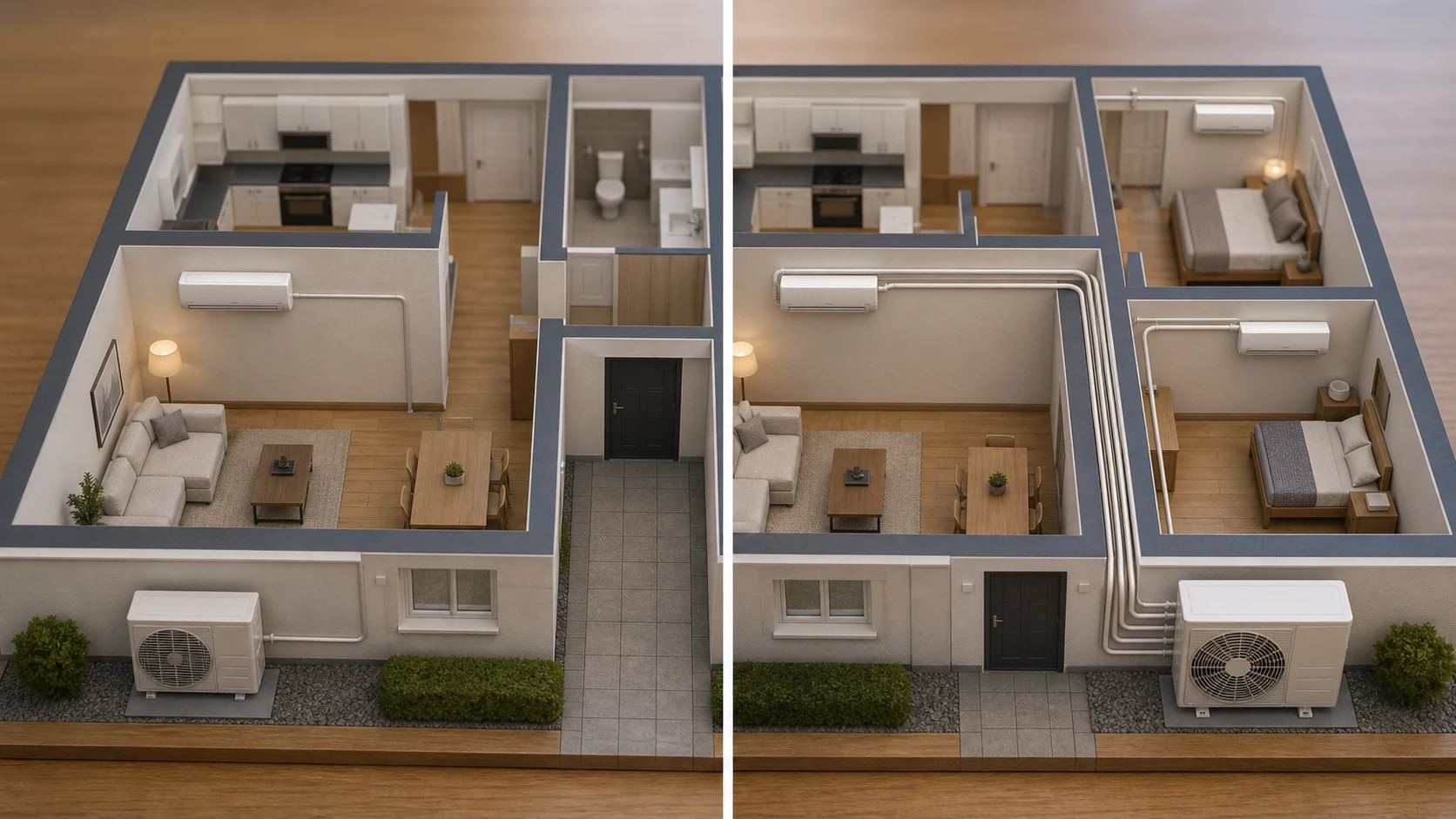
Then go outside. Photograph the external wall where the outdoor unit might sit, standing back far enough to show ground level, any path or boundary, and the nearest window. If you can, take one shot that shows both the inside wall and the outside wall in relation to each other — that is the single most useful image, because it defines the pipe run.
Finally, the awkward details: the consumer unit, any existing equipment labels, and where water could drain away. These are the things that most often turn a straightforward job into a more expensive one, and finding them early is entirely to your advantage.
What to write alongside them
A few lines of context are worth more than more photos. Say what the room is used for and when — a bedroom used at night is a different problem from a home office used all day. Say whether you want heating as well as cooling, because that changes both the equipment and, in England, whether planning permission is needed.
Mention anything you already know will be awkward: a flat, a listed building, a shared wall, a landlord, restricted parking, or a neighbour close to the only sensible outdoor position. None of these stop the work, but all of them change the plan, and it is cheaper to know now.
The things you cannot photograph
A photograph shows surfaces, and several of the things that move a price sit behind them. What a wall is made of, where the joists run, whether there is a cavity, what is buried in the plaster, and how the loft is boarded all matter, and none of them appear in a picture of the room.
So write down what you know and say plainly what you do not. The age of the property is a genuinely useful clue on its own, as is whether the walls are solid or cavity, whether anything has been extended, whether the wall you have in mind is external or internal, and whether there is access above the ceiling. Not knowing what a wall is made of is a more useful answer than a guess, because a guess gets priced.
The same applies to the route outside. A photograph flattens distance, so give the approximate metres between the two positions, note anything the pipe would have to cross, and say whether there is a drain, a gully or a border below the outdoor position. Those three lines routinely change an estimate more than any of the photographs do.
What a survey adds that photos cannot
A physical survey confirms wall construction, checks that the electrical supply can take the load, verifies the pipe route can actually be run where it looks like it can, and measures rather than estimates. For a straightforward single room, photos often get close enough that the survey simply confirms the plan.
For anything larger, older, listed, high up, or shared with neighbours, the survey is where the real number comes from. A quote issued without one on a complicated property is not being efficient; it is deferring the difficult questions until the day of installation, which is the worst possible time to discover them.