Trust AC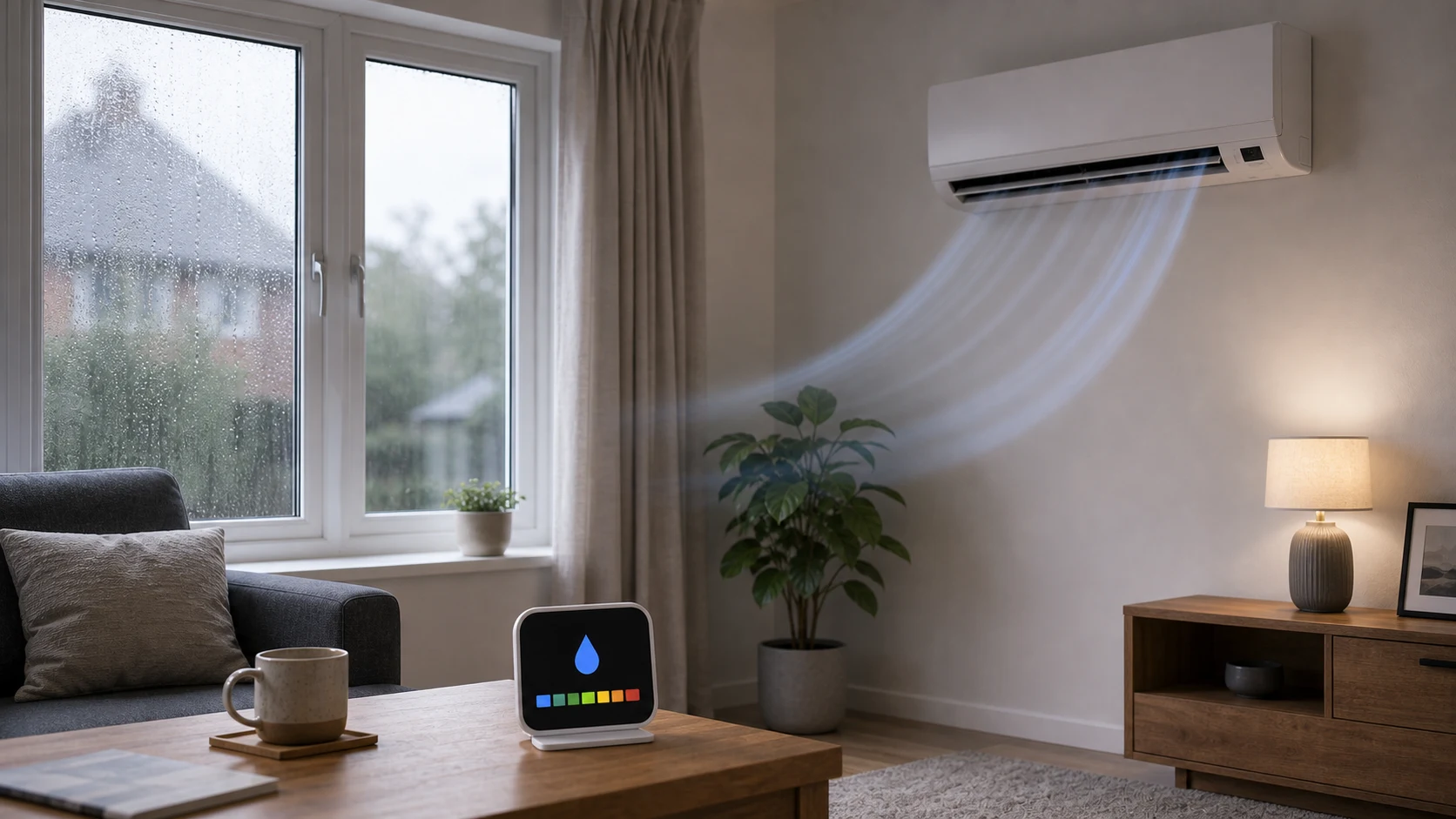
Topic-specific guidance
Dehumidification and dry mode needs its own estimate logic because what air conditioning can and cannot do for humidity, damp rooms and summer stickiness. The useful first step is to connect the customer's room, evidence, constraints and budget before comparing equipment, dates or written scope. Treat any missing photo, route detail or permission note as an estimate risk rather than a small admin gap. That discipline keeps the article useful for customers and traceable for the team reviewing the enquiry later.
Dry mode is useful when the room feels sticky but is not necessarily too hot. It should be presented as air-conditioner dehumidification support, not as a full damp-proofing or building-defect solution.
Useful evidence includes humidity readings if available, window condensation, room use, cooking or shower moisture, drainage route and whether the customer is trying to solve mould, comfort or summer sleep.
The quote should say whether the system is being selected mainly for cooling, heating or humidity comfort. If damp, leaks or ventilation defects are suspected, those should remain outside the air conditioning promise.
The risk is promising that dry mode will fix building moisture. Air conditioning can remove moisture while operating, but it cannot replace ventilation, repair leaks or solve cold surfaces by itself.
When Dehumidification and dry mode is used in the enquiry form, pair the question with the target room, preferred temperature, daily use pattern, budget boundary, outdoor-unit option, access limits, noise sensitivity, drainage route, controller expectation, service access and any permission constraint. That gives the estimator an auditable set of assumptions instead of a single isolated topic.
What dry mode is actually doing
Dry mode is not a separate technology. It is the same cooling cycle run deliberately at low airflow, so the coil stays colder relative to the air passing over it and condenses more moisture per unit of air. That is why it feels different from normal cooling even though the machinery is identical.
The consequence people miss is that it still cools. Running dry mode for a long period will lower room temperature as well as humidity, so it is not a way to dehumidify a room while keeping it warm. If that is what you need, a dehumidifier is the right appliance.
Why removing moisture makes a room feel better
Your body sheds heat partly by evaporating sweat, and that process slows down as the air gets more humid. This is why 24°C in humid air feels worse than 24°C in dry air, and why a room can feel clammy without being especially hot.
It also explains why air conditioning feels more effective than a fan at the same temperature. A fan moves air; air conditioning removes water from it. In a muggy British summer, much of the improvement people notice is the dehumidification rather than the temperature drop.
Where it genuinely helps, and where it does not
It helps with the moisture that people and activity add to a room: cooking, showering, drying laundry indoors, or simply several people in a closed space on a humid day. In those cases dry mode can take the edge off quickly.
It does not fix building moisture problems. Rising damp, penetrating damp, a leak, cold bridging or inadequate ventilation are structural issues, and running air conditioning against them treats a symptom while the cause continues. Condensation forming on cold surfaces in winter in particular is usually a ventilation and insulation question, not a job for the air conditioning.
Dry mode or a dehumidifier
They are not interchangeable, and the difference is what happens to the temperature. Dry mode removes moisture while cooling the room, because it is the cooling cycle running at low airflow. A portable dehumidifier removes moisture and warms the room slightly, because all the electricity it uses ends up as heat and it has nowhere outside to reject it to.
That makes the choice mostly seasonal. In a muggy August a room that is both damp and too warm wants dry mode. In a cold, damp November — drying washing indoors, condensation on the windows — a dehumidifier is the right appliance, and running air conditioning against that problem would make a cold room colder.
A dehumidifier is also the better answer where the damp is in one small space, such as a utility room or a cupboard, or where you need to move the machine between rooms. Neither of them fixes a building fault, and if the moisture is coming through a wall rather than off the washing, both are running costs rather than solutions.
Using it sensibly
Use it in bursts rather than continuously. Because it cools as it dries, leaving it on all day tends to overshoot on temperature and cost more than it needed to. An hour after cooking or a shower usually does more than an afternoon of it.
And keep an eye on the drain. Dry mode devotes more of what it does to removing water rather than dropping temperature, and it tends to be left running for long stretches, so the drain stays wet. If there is a marginal problem with the drainage route — a shallow fall, a partial blockage — this is the mode most likely to find it.
A practical note on the controls: on many units dry mode does not let you set a target humidity, and on some it does not let you set a temperature either — it simply runs its own programme until you stop it. That is another reason to use it in bursts rather than leaving it on, and a reason to check on your own handset what dry mode actually exposes before assuming it will hold the room where you want it.