Trust AC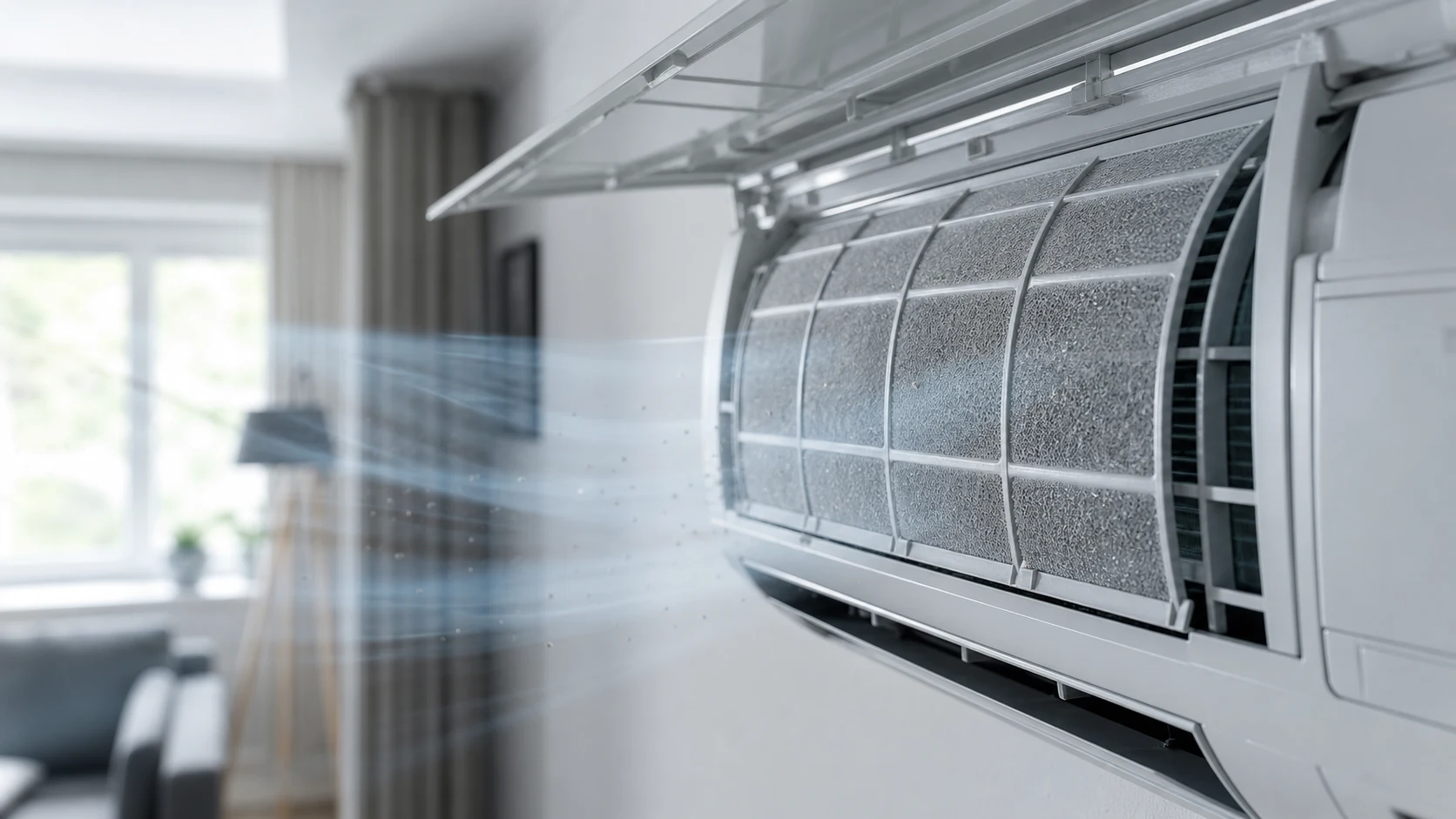
Topic-specific guidance
Filters, airflow and indoor air quality needs its own estimate logic because filters, airflow and indoor air quality expectations for domestic and commercial air conditioning. The useful first step is to connect the customer's room, evidence, constraints and budget before comparing equipment, dates or written scope. Treat any missing photo, route detail or permission note as an estimate risk rather than a small admin gap. That discipline keeps the article useful for customers and traceable for the team reviewing the enquiry later.
Filter discussion should stay practical: filters protect airflow and equipment cleanliness, and some products add comfort features. They should not be marketed as a cure-all for indoor air quality.
Evidence includes room use, dust, pets, cooking, treatment activity, filter access, cleaning habits and whether the complaint is smell, dust, weak airflow or allergy concern.
The quote and handover should explain filter access, user cleaning, service intervals and any optional filtration feature in plain terms. Claims should stay within the equipment actually supplied.
The risk is either ignoring filters or overselling them. Dirty filters can weaken comfort and efficiency, but air conditioning filtration is not the same as a full ventilation or air-purification strategy.
When Filters, airflow and indoor air quality is used in the enquiry form, pair the question with the target room, preferred temperature, daily use pattern, budget boundary, outdoor-unit option, access limits, noise sensitivity, drainage route, controller expectation, service access and any permission constraint. That gives the estimator an auditable set of assumptions instead of a single isolated topic.
What the filter in a split unit is actually for
The mesh filter behind the front panel exists to protect the coil, not to clean the air you breathe. It catches hair, lint and coarse dust before they reach the heat exchanger fins, where a build-up would insulate the coil and choke the airflow. That is a real job and worth doing well, but it is a machine-protection job.
This matters because it is often sold as an air-quality feature. A standard mesh filter does very little about the particle sizes that affect health, and nothing at all about carbon dioxide, cooking fumes or volatile compounds from furnishings, because none of those are removed by recirculating air through a screen.
A blocked filter costs more than it looks
Restricted airflow across the coil lowers the coil temperature, which reduces capacity, increases run time and eventually ices the coil. The unit gets louder because the fan is working against resistance, and it dehumidifies less well because less air passes over the coil at all.
Cleaning the filters is a five-minute job: lift the panel, slide them out, rinse in lukewarm water, dry fully before refitting. Every month or two through the cooling season is right for most homes; more often with pets, carpet or building work nearby. Never refit a damp filter, and never run the unit with the filters out, because then the dust goes straight onto the coil where you cannot reach it.
The upgrades that do and do not help
Some units accept a finer filter or a photocatalytic or ionising module. Finer media do capture more, but they also restrict airflow, and fitting one that the fan was not designed for trades cooling capacity for filtration you may not need. Check what the manufacturer specifies rather than what a retailer offers.
Ionisers and plasma modules make claims that are hard to verify at the airflow rates involved, and some produce small amounts of ozone. If particle removal is the actual goal, a standalone HEPA air purifier sized for the room will do it better and more cheaply than any add-on to an air conditioner, and you can move it between rooms.
The coil behind the filter
A mesh filter catches the coarse material and lets the fine material through, which is why the coil behind it gradually acquires a grey felt of dust even in a house where the filters are rinsed every month. That layer insulates the fins and narrows the gaps air passes through, and it builds slowly enough that nobody notices the performance going.
It matters more than it sounds because the coil is wet whenever the system is cooling. Dust on a permanently damp surface is where the musty smell comes from, and where biological growth establishes itself — in the fins and in the drain tray underneath them, which is the part nobody sees.
This is the job a service visit does that you cannot: a proper coil clean, the drain tray cleared and the drain flushed. It is worth asking whether a quoted service actually includes cleaning the coil or only changing filters and checking pressures, because the two are priced quite differently and only one of them addresses the smell people are usually complaining about.
Air quality is mostly not an air conditioning question
Stuffiness and lingering smells are ventilation problems, and a recirculating split unit does not touch them; the separate guide to air conditioning versus ventilation sets out which symptom points at which system. What matters here is that filtration and ventilation are not substitutes for one another.
Where air conditioning does help indoor air is by keeping humidity down, since dust mites and mould both need moisture. Treat it as one part of a set that also includes extraction, purposeful ventilation and, if particles are the concern, a purifier chosen for that job.
If you genuinely want to know whether ventilation is the problem, a carbon dioxide monitor costs very little and answers it directly. A reading that climbs through the afternoon in a closed room and drops as soon as a window is opened tells you what no amount of filtering will fix.