Trust AC
Topic-specific guidance
First week after air conditioning installation needs its own estimate logic because new air conditioning? what is normal in the first week — settings, condensation, filters, and the noises not to worry about. The useful first step is to connect the customer's room, evidence, constraints and budget before comparing equipment, dates or written scope. Treat any missing photo, route detail or permission note as an estimate risk rather than a small admin gap. That discipline keeps the article useful for customers and traceable for the team reviewing the enquiry later.
The first week after installation is about learning normal behaviour before calling everything a fault. Customers should know which mode to use first, what temperature range is sensible, how condensation should drain, what sounds may happen and when a change is unusual enough to contact Trust AC.
Useful evidence for a first-week question includes the controller mode, set temperature, fan speed, outdoor temperature, photos of any water, a short sound clip if noise has changed, filter or grille position and whether the symptom appears during cooling, heating, dry mode or defrost. That avoids guessing from a single word like dripping or loud.
The handover should give simple first-week instructions: try the agreed mode, avoid extreme set points, keep doors and windows consistent during testing, check the drain route visually and report error codes with photos. If servicing or filter cleaning affects warranty, the customer should see that instruction early.
The risk is either ignoring a real installation issue or escalating normal running behaviour too quickly. Clear first-week guidance makes support calmer because both customer and installer can compare the symptom with the agreed handover baseline.
When First week after air conditioning installation is used in the enquiry form, pair the question with the target room, preferred temperature, daily use pattern, budget boundary, outdoor-unit option, access limits, noise sensitivity, drainage route, controller expectation, service access and any permission constraint. That gives the estimator an auditable set of assumptions instead of a single isolated topic.
What is normal in the first few days
A faint smell when the system first runs is common and usually clears within a day or two as manufacturing residues burn off the coil. Water dripping steadily from the outdoor drain in cooling mode is not a leak — it is the moisture the system has pulled out of your room air, and its absence would be more surprising than its presence.
You will also hear things. A soft click as the system starts or stops, a change in fan tone as the inverter trims output, and occasional gurgling from refrigerant moving through the pipework are all normal. What is not normal is water inside the room, a burning smell that persists, or the unit repeatedly stopping and restarting within minutes.
Settings worth getting right early
A new system invites experimenting with the dial, and the usual first instinct is the wrong one. Turning the setpoint far below what you want does not shorten the time to comfort, because the equipment is already working flat out getting there; it only changes where it stops. Pick the temperature you actually want to live at and leave it.
Spend ten minutes with the schedule in the first week rather than the first month. Getting the system to come on before a room is uncomfortable, rather than after, uses less energy and works better than running it hard on demand. If you have several indoor units, check how they interact — on a shared outdoor unit they cannot always heat and cool at the same time.
What is not normal, and what to do about it
The list above covers what to expect. The more useful list is the short one of things that are not settling in and will not improve on their own, because a fault reported in week one is much easier to resolve than the same fault reported in month six.
Report any of these straight away: water anywhere inside the room, ice on the pipework or the indoor coil, a breaker that trips, a unit that runs continuously without ever reaching the setpoint, or a smell of burning rather than the faint new-equipment smell. Switch the unit off for the last two. None of them are teething problems, and while the installation paperwork is still being finalised there is no argument about whose responsibility they are.
What to check and keep hold of
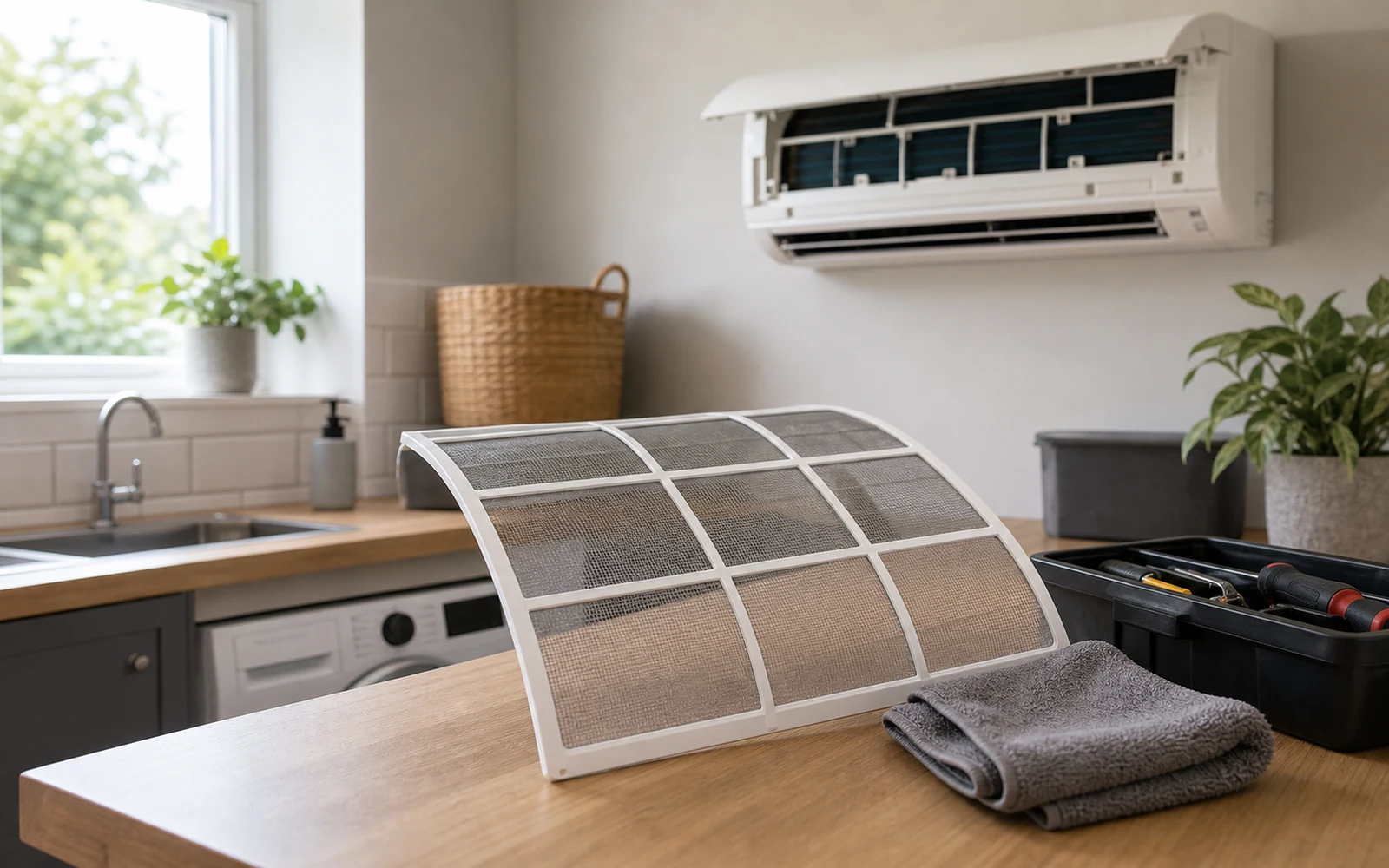
Look at the filters after the first week or two, especially if the installation involved drilling or the room has been dusty. They are designed to be removed and rinsed, and a clogged filter is the single most common cause of a system that seems to have lost performance.
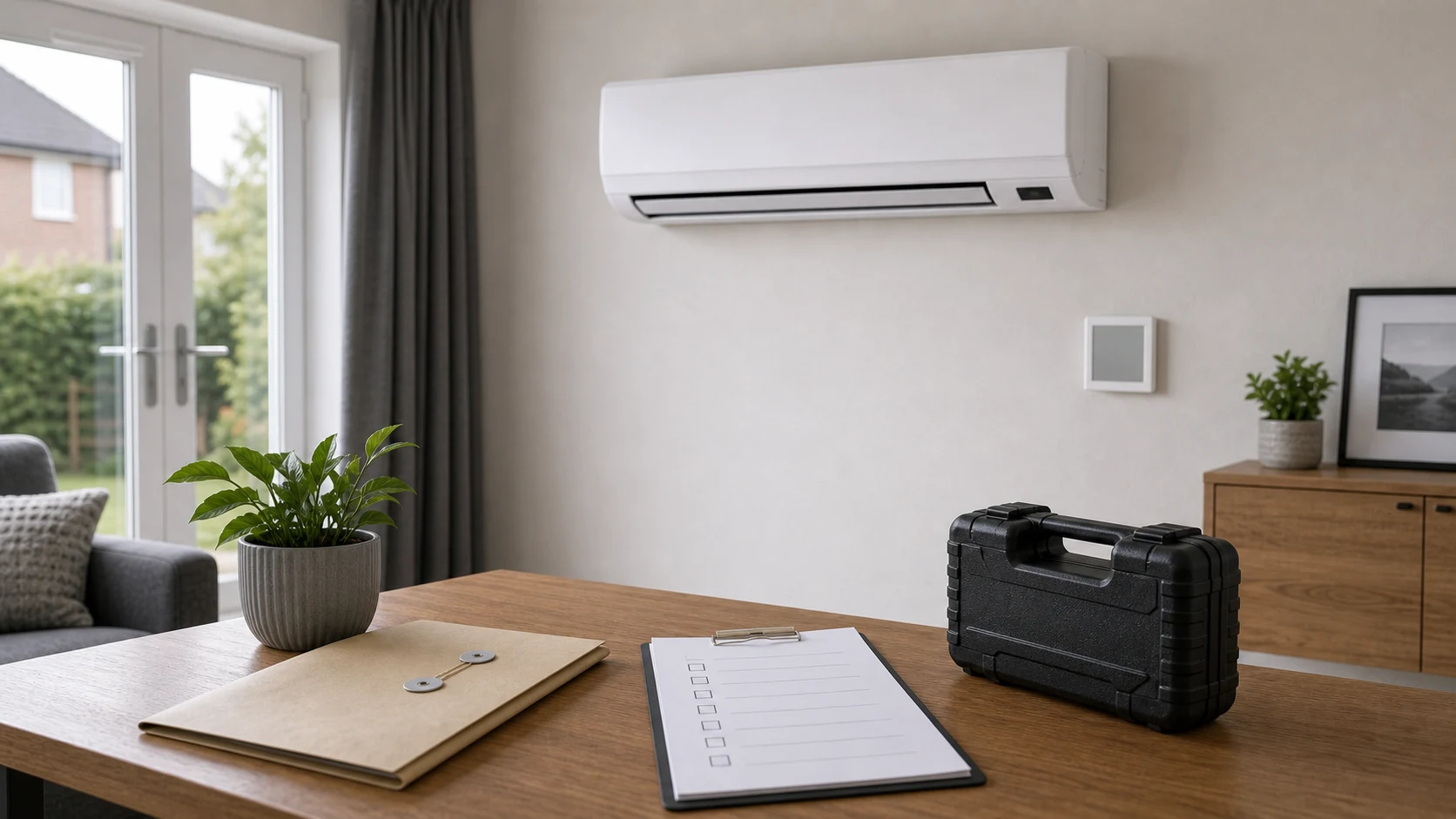
Make sure you have the paperwork before the installer is a distant memory: model numbers, the commissioning record, warranty terms and whatever conditions attach to them, and what the servicing interval should be. If anything about the system's behaviour looks wrong in the first weeks, that is the moment to raise it — while the installation is fresh and everyone still remembers the detail.
It is also the best fortnight you will get for establishing what it costs to run. Note the electricity meter reading at the start and end of two weeks of ordinary use, and you will have a real figure for your property, your tariff and your habits — worth more than any efficiency rating, and something to compare against in a few years if you ever suspect the system is not working as well as it did.