Trust AC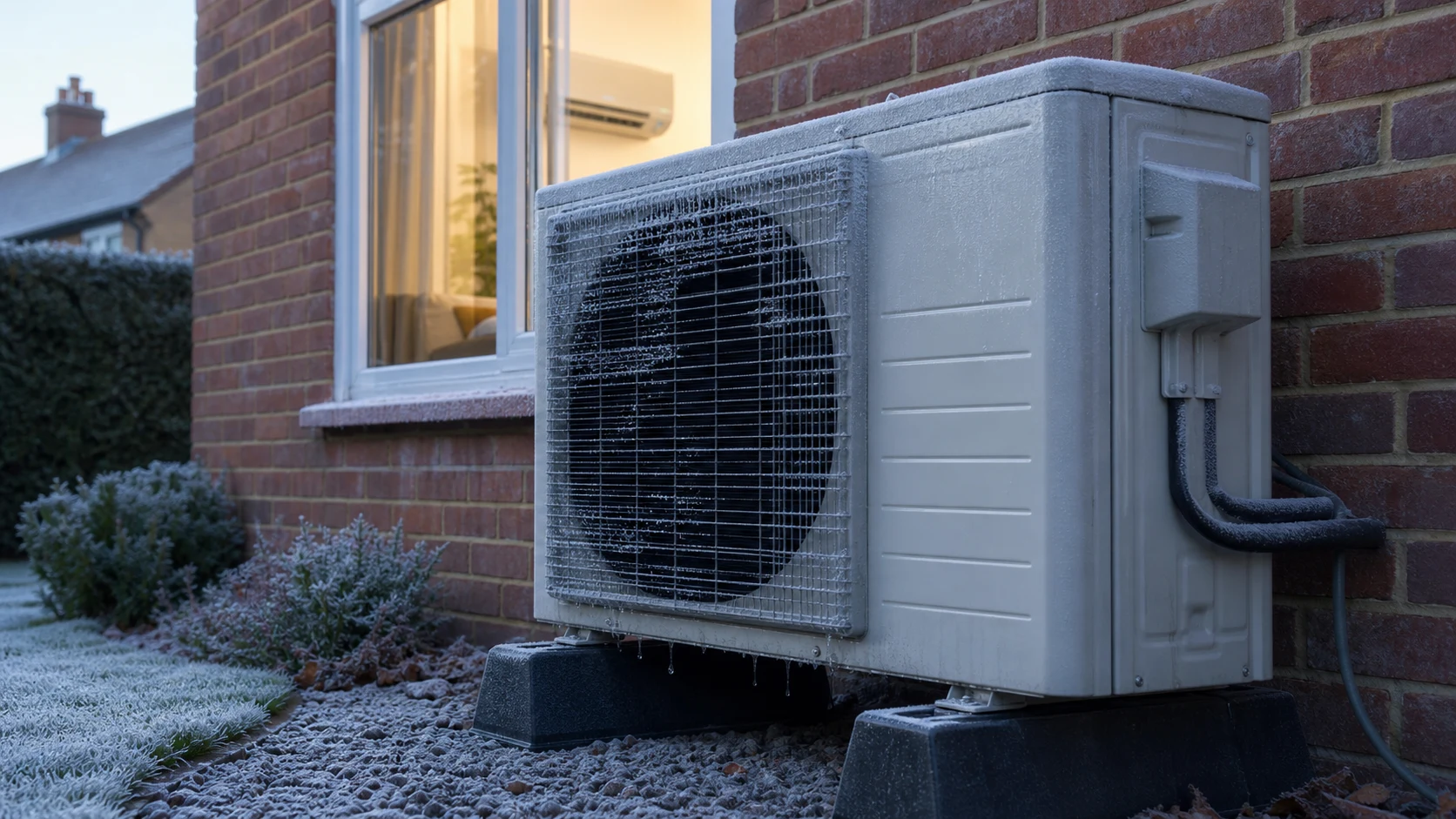
Topic-specific guidance
Winter heating and defrost cycle needs its own estimate logic because why winter heating, defrost and outdoor temperature change heat-pump behaviour. The useful first step is to connect the customer's room, evidence, constraints and budget before comparing equipment, dates or written scope. Treat any missing photo, route detail or permission note as an estimate risk rather than a small admin gap. That discipline keeps the article useful for customers and traceable for the team reviewing the enquiry later.
Winter heating expectations should include outdoor temperature and defrost behaviour. An air-to-air heat pump can heat effectively, but it still works with outside air and may pause or change sound during defrost.
Useful evidence includes winter comfort target, insulation, room volume, door opening, outdoor-unit exposure, drainage for defrost water and whether the system is main heating or supplementary heating.
The quote should say whether heating performance is a core requirement and whether the selected model suits that expectation. It should also explain that heating comfort depends on airflow and correct mode use.
The risk is judging normal defrost behaviour as a fault or expecting identical performance at every outdoor temperature. Handover language can prevent that misunderstanding.
When Winter heating and defrost cycle is used in the enquiry form, pair the question with the target room, preferred temperature, daily use pattern, budget boundary, outdoor-unit option, access limits, noise sensitivity, drainage route, controller expectation, service access and any permission constraint. That gives the estimator an auditable set of assumptions instead of a single isolated topic.
Why it stops heating for a few minutes
In heating, the outdoor coil is the cold side, and it is often below the temperature of the outdoor air. Moisture in that air condenses on it and freezes. Once enough ice builds up, airflow through the coil drops and the system cannot absorb heat, so it has to melt it off.
It does that by briefly reversing — running as if it were cooling — so hot gas passes through the outdoor coil. For a few minutes the indoor unit stops blowing warm air, the outdoor unit may steam visibly, and water runs off the base. It is the system working correctly, not failing.
The conditions that cause the most defrosting
The worst case is not the coldest weather. It is damp air a little above freezing — roughly 0°C to 7°C with high humidity, which describes a great deal of a British winter. There is far more moisture available to freeze at 4°C and 90% relative humidity than at −5°C, when the air is dry.
That is why a system can defrost more often on a mild grey day than on a hard frost, and why efficiency figures quoted at a single outdoor temperature do not tell you much about how it will behave here.
What good installation does about it
Melt water has to go somewhere. An outdoor unit sitting flat on the ground can end up standing in its own meltwater, which refreezes into the base and the fan. Mounting it clear of the ground on feet or a wall bracket, with drainage below it, is what prevents that.
Position matters too. Under a north-facing wall in permanent shade, in a sheltered corner where cold air pools, or where discharge blows straight back at the coil, all increase defrost frequency. So does anything that restricts airflow, including a decorative screen fitted too close.
Heating output falls as it gets colder
The capacity printed on the box is measured at a mild outdoor temperature. As it gets colder outside, there is less heat in the air to collect and the machine has to work across a wider gap, so both the heat it can deliver and the efficiency with which it delivers it fall away. A unit rated at 3.5kW of heating will not be producing 3.5kW on a frosty morning.
That matters because a room's heat loss is doing the opposite: it is highest exactly when the unit's output is lowest. A system sized only against a summer cooling load can therefore be comfortable in August and disappointing in February, which is one of the more common regrets people report.
If heating is a real part of why you are buying, ask for the heating capacity quoted at a low outdoor temperature rather than the headline figure, and ask what the unit is rated down to. Most modern equipment keeps working well below freezing; the question is not whether it runs but how much it still delivers when you need the most.
Living with it
Do not switch the unit off during a defrost — it will simply have to start again. If it is defrosting every twenty minutes, or the ice does not clear, that is worth a call; a fault, low refrigerant or a blocked coil all show up as excessive defrosting.
Expect heating output and efficiency to be lower on the days when defrosting is frequent, because energy that went into melting ice did not go into the room. A well-positioned unit still heats perfectly well through a British winter; it just does not do it at the headline efficiency figure on the box.
One habit worth forming in winter: leave it running steadily at a moderate temperature rather than switching it on and off through the day. Every restart from cold means working hard to bring the room back up, and in damp weather a system that has been off is more likely to need a defrost as soon as it starts. Held at a steady setting it spends most of its time modulating gently, which is both cheaper and quieter than repeatedly climbing back to where it was.