Clinics and treatment rooms

Air conditioning for a clinic or treatment room

In a treatment room, air conditioning is judged by the patient lying still beneath it. Quiet running, airflow that never lands on the couch and filters cleaned on schedule matter more than raw cooling power — and the installation has to fit around a diary full of appointments. This page is for small clinics such as dental, physiotherapy, osteopathy and aesthetics practices; specialised clinical ventilation, such as for operating theatres, is a different discipline covered by our large-project healthcare service.

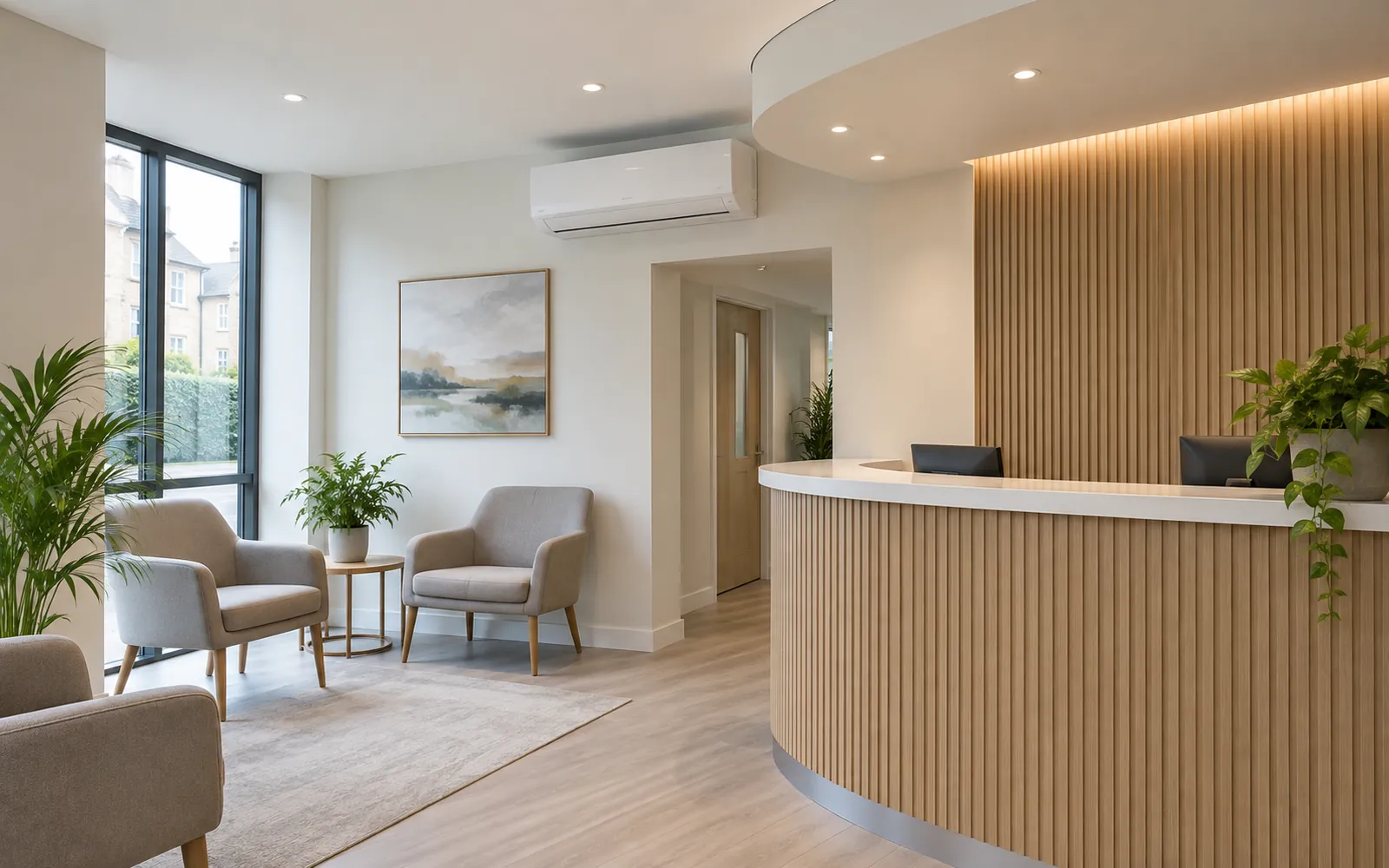
Clinic reception with a wall-mounted air conditioning unit above the waiting area

What matters in a treatment room

Quiet matters more than capacity

A patient on a couch notices noise and draughts that a busy office never would. Indoor units differ by several decibels at the same output, and a small unit working hard at the top of its range is louder than a larger one running gently. Choose for quiet running at the load the room actually needs.

Keep the airflow off the patient

Position decides comfort. A wall unit above the couch blows straight onto someone lying still and lightly dressed; the same unit on the opposite wall, or a ceiling cassette with its louvres set to push air along the ceiling, cools the room without anyone feeling it.

Hygiene is maintenance, not a feature

Filters cleaned on schedule and coils kept clean are what keep a clinic's air conditioning hygienic — not a label on the box. Choose units whose filters are easy to reach, agree a servicing interval, and keep the records alongside the rest of the practice's maintenance.

Air conditioning is not ventilation

A split system cools and recirculates the room's own air; it does not bring fresh air in. Where a room needs fresh air or extract — for example where a dental practice's fallow time depends on the room's air changes — that is a ventilation question to settle alongside the cooling, not something air conditioning solves on its own.

Work around the appointment book

Drilling and pipework can be done outside clinic hours or on a closed day, one room at a time, so the practice keeps seeing patients. The landlord's consent applies just as it does to an office, and the permitted development right for heat pumps covers homes, not business premises.

What Trust AC gives you in writing

So the practice can plan the work around patients, not the other way round:

  1. An installation programme around your appointmentsWhich rooms, which days and what stays in use, agreed before anything is booked — typically one room at a time, with the noisy work outside clinic hours.
  2. A pack for your landlord or building managerThe outdoor unit's model and dimensions, the manufacturer's published sound data, the proposed position and fixing, and photos or a marked-up drawing for the landlord's consent.
  3. A written view on the planning routeWhether the outdoor unit needs planning permission at your address, and the reason. The council has the final say, and we say so.
  4. The expected noise level at the nearest neighbourThe sound level at the nearest window for the proposed unit and position, using the MCS 020a method.
  5. A note on who owns and maintains itWho services the system and keeps the records, who is responsible if it fails, and whether it stays when the lease ends.

Common questions

Can air conditioning be installed in a clinic without cancelling appointments?

Usually, yes. The disruptive work can be done outside clinic hours or on a closed day, one treatment room at a time, while the others stay in use. The programme is agreed in writing before anything is booked.

Where should the indoor unit go in a treatment room?

Not above the couch. Airflow landing on someone lying still is the most common complaint in treatment rooms. The opposite wall, or a ceiling cassette with its louvres set to send air along the ceiling, cools the room without the patient feeling a draught.

Does air conditioning bring fresh air into the room?

No. A split system cools and recirculates the air already in the room. If a treatment room needs fresh air or extract — for instance where a dental practice's fallow time depends on air changes — that needs ventilation, planned alongside the cooling.

How often should a clinic's air conditioning be serviced?

Filters typically need cleaning every few weeks when the system is in regular use, and the whole system a professional service at least once a year; the manufacturer's manual sets the exact intervals. Keeping those records with the rest of the practice's maintenance makes them easy to show when asked.

Tell us about the clinic

Photos of each treatment room and the outside wall, your clinic hours and the postcode are enough to start. We come back with a programme that works around your patients.

Get my price