Leasehold flats

Air conditioning in a leasehold flat

In a flat, two separate permissions decide whether the job can happen: your lease and the planning rules. They are decided by different people, on different grounds, and the lease is usually the slower of the two. This page sets out what applies, and what Trust AC gives you in writing so you can ask your freeholder without having to explain the technical side yourself.

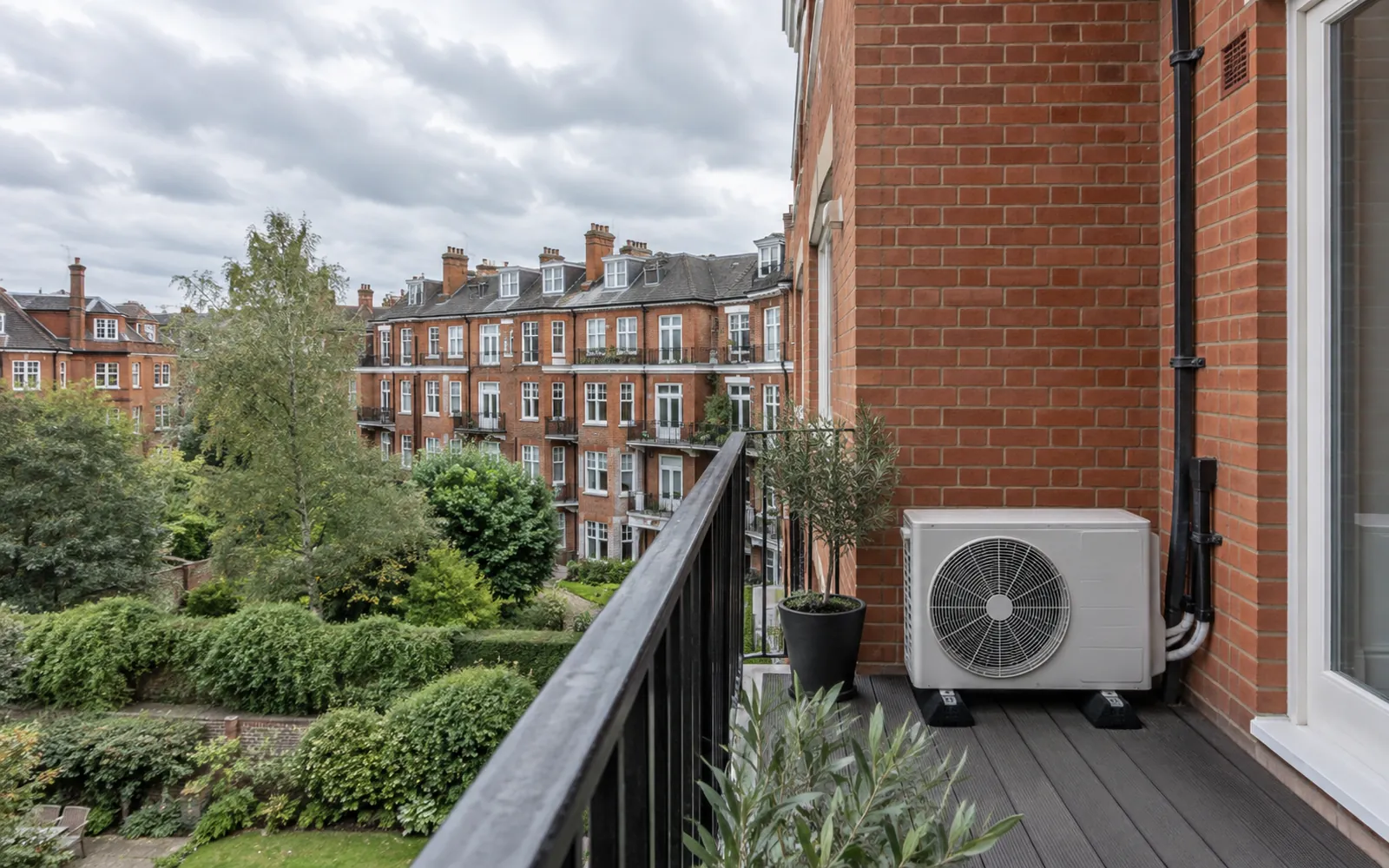
Outdoor air conditioning unit on the balcony of a red-brick London mansion block

What applies to a flat

Your lease comes before the planning question

The outside wall, the roof and the balcony are usually not yours to drill into: in most leases they are common parts or are retained by the freeholder. Leases commonly require written consent, often a licence to alter, before anything is fixed to them. That is a private matter between you and the freeholder, and it applies even when no planning permission is needed at all.

The flat limits under Class G are tighter than for a house

The permitted development right for air source heat pumps does cover a block of flats, but on a flat the outdoor unit must not be more than 0.6 cubic metres — and the allowance for a second unit applies only to detached houses. In a conservation area the unit cannot go on a wall or roof fronting a highway. A cooling-only system is not covered by the right at any size, so it needs planning permission.

Where the outdoor unit can physically go

In a purpose-built block that usually means a balcony, a flat roof, or a bracket on the rear elevation, and the managing agent may have already decided which of those is acceptable for the whole building. In a Victorian conversion it is more often the rear wall or a rear flat roof. The position drives the pipe run, the condensate route and the price, so it is worth settling before anyone quotes.

Noise is the neighbours' question, and the freeholder's

In a block, the nearest habitable room window can be a few metres away, sometimes in the flat above. A permitted development installation has to pass the MCS 020a sound calculation at that window, and a freeholder will often ask for the figure before consenting. It is easier to answer that before choosing a position than to move a unit afterwards.

What Trust AC gives you in writing

You should not have to translate a quote into something a managing agent will accept. With your quote you get:

  1. A pack for the freeholder or managing agentThe outdoor unit's model and dimensions, the manufacturer's published sound data, the proposed position and fixing, and photos or a marked-up drawing showing where it goes. That is the substance of what a licence to alter application asks for.
  2. A written view on the planning routeWhich of the three applies to your flat — permitted development under Class G, a planning application, or listed building consent as well — and the condition that decides it. Your council has the final say, and we say so; this is the reasoning, not a guarantee.
  3. The expected noise level at the neighbourThe sound level the proposed unit and position produce at the nearest neighbouring window, using the MCS 020a method, so you can answer that question before it is asked.
  4. A landlord and tenant note, if the flat is letIf you are letting the flat, a short written note covering who services the system, what happens if it is damaged, and whether it stays or is removed at the end of the tenancy.

Common questions

Do I need my freeholder's permission to install air conditioning in a leasehold flat?

Almost always. The external wall, roof and balcony are usually common parts or retained by the freeholder, and most leases require written consent — often a licence to alter — before anything is fixed to them. This is separate from planning permission, and it applies even if planning permission is not needed. Check the alterations clause in your lease, then ask the managing agent.

Can I install air conditioning in a flat without planning permission?

Sometimes. An air-to-air heat pump that heats as well as cools can be permitted development on a block of flats if it meets the Class G conditions, including an outdoor unit no larger than 0.6 cubic metres and, in a conservation area, a position that does not front a highway. A cooling-only unit is not covered and needs planning permission. Your council decides.

What does the freeholder usually want to see?

Freeholders and managing agents tend to ask the same four things: what the unit is and how big, how loud it is at the nearest window, exactly where it will be fixed and how, and who is responsible if it leaks or has to come off later. Trust AC provides the first three with the quote as a matter of course.

How long does freeholder consent take?

It depends entirely on the freeholder and managing agent, and it is usually the slowest part of the job — often several weeks, sometimes longer where a surveyor is instructed. Start it before booking an installation date, not after.

Send the flat's details

A photo of the outside wall or balcony, the room, and your postcode is enough to start. You get an indicative range in minutes, and the written pack with the quote.

Get my price